Guacamole Ratios: What Each Ingredient Is Doing
| Ingredient | Quantity | Purpose |
|---|---|---|
| Hass Avocados | 3 Large Ripe | Rich, creamy healthy fat base |
| White Onion | 1/4 cup finely diced | Crisp allium sweetness |
| Serrano Pepper | 1 whole with seeds | Bright, sharp heat |
| Fresh Lime Juice | 1 tbsp | Acid balance & enzyme stabilization |
| Cilantro | 1/3 cup chopped | Citrus-herbal top note; half ground, half folded |
| Sea Salt | 3/4 tsp | Seasoning plus abrasive for grinding the paste |
Ingredients
Checklist- 3 Ripe Hass Avocados
- 1/4 cup White Onion (diced)
- 1 Serrano Pepper (minced)
- 1/3 cup Cilantro (chopped)
- 1 tbsp Lime Juice
- 3/4 tsp Sea Salt
- 1 Roma tomato, seeded and diced (optional)
Step-by-Step Method
- 1 Check Ripeness: Press near the stem end — a ripe Hass yields to gentle pressure without feeling hollow, and the skin is dark and pebbly. If it is firm, leave it in a paper bag with a banana for a day. Cut one open before committing to the batch; a brown, stringy interior means the fruit is past it.
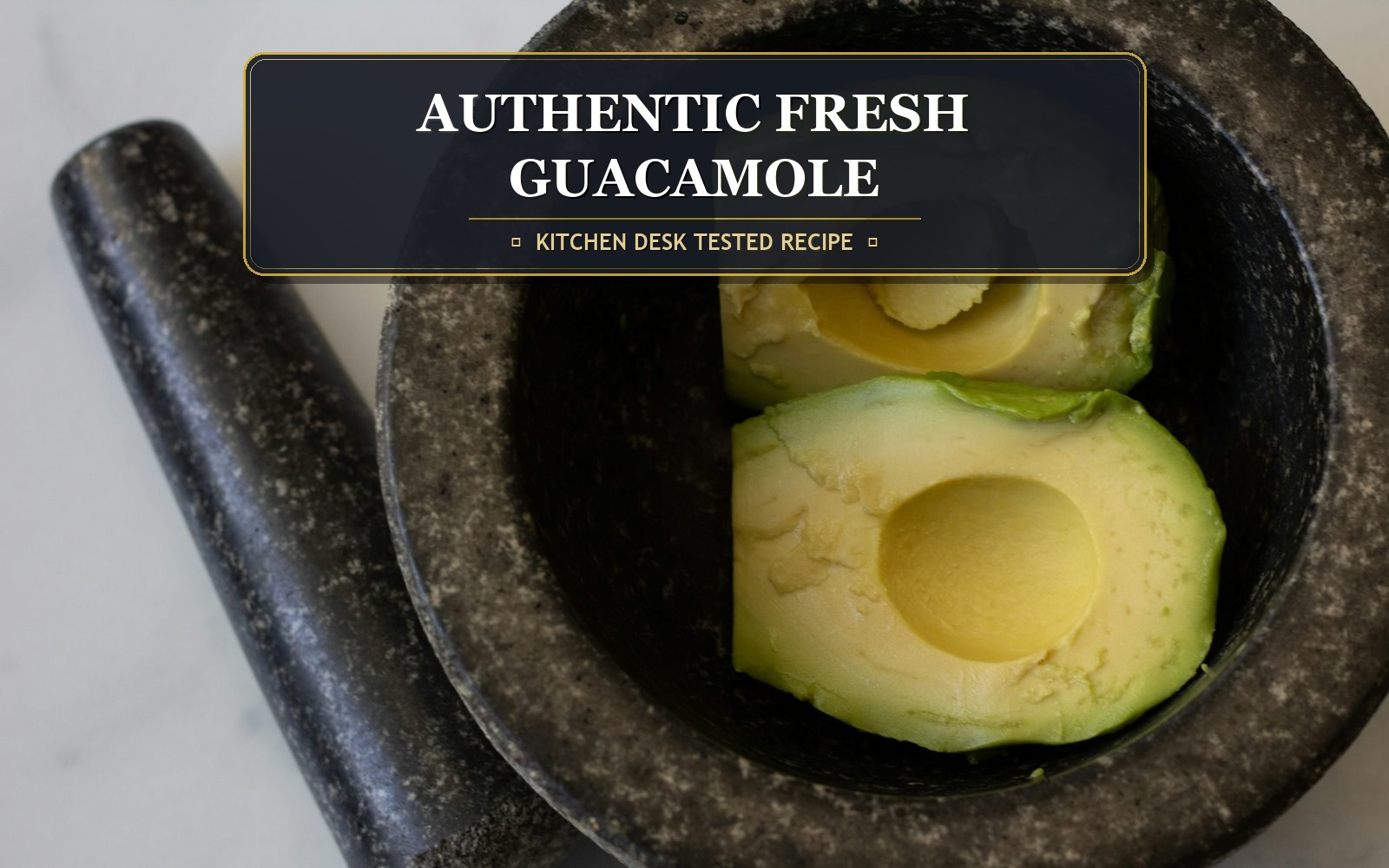
- 2 Crush Aromatics: In a mortar or bowl, crush the onion, half the cilantro, serrano pepper, and salt into a coarse paste. Work for a full minute until the onion looks translucent and wet rather than diced — the salt is doing the grinding, so do not skip it or add it later.
- 3 Scoop Avocados: Halve the avocados, remove the pits, and scoop the flesh into the bowl. Run the spoon close to the skin, since the darkest green flesh just beneath it carries the most flavor and the most carotenoids.
- 4 Coarse Mash: Mash with a fork, leaving satisfying chunks. Aim for roughly half smooth and half in pea-to-marble sized pieces; a completely smooth guacamole eats like a dip rather than a salad and loses the textural contrast that makes it worth eating.
- 5 Fold & Balance: Fold in the remaining cilantro and the lime juice, plus the diced tomato if using. Fold rather than stir — the fewer strokes, the more chunks survive. Taste and adjust salt and lime; guacamole almost always needs more salt than people expect.
- 6 Serve: Serve immediately, ideally in the molcajete it was made in. If there is a wait, level the surface and press wrap directly onto it.
Why Guacamole Browns, and What Actually Slows It
Avocado flesh contains polyphenol oxidase enzymes that turn brown when exposed to atmospheric oxygen. By crushing alliums (onions and chilies) with salt first, you release sulfur compounds that bond with the avocado fat, while lime juice lowers the pH, substantially delaying oxidation.
That browning reaction is worth understanding properly, because almost every piece of storage advice you have heard about guacamole is aimed at it. Polyphenol oxidase — PPO — sits inside the avocado's cells doing nothing until you cut or crush the fruit and break those cell walls. Once the enzyme meets both the phenolic compounds stored elsewhere in the cell and the oxygen in the air, it catalyses their conversion into quinones, which then link together into melanin-like brown pigments. Nothing about this is spoilage; the guacamole is perfectly edible, it simply looks grey. What matters practically is that the reaction needs all three of enzyme, phenols and oxygen, so removing any one of them stops it.
Acid is the most useful lever. PPO works best at a pH around 6 to 7 and slows dramatically below about 4.5, which is exactly what a tablespoon of lime juice per three avocados achieves at the surface. This is the honest reason lime belongs in guacamole beyond flavor, and it is also why bottled lime juice, which is more consistently acidic than fresh, technically preserves colour slightly better even though it tastes worse. Salt is the second lever — sodium ions interfere with the enzyme's copper-containing active site — and the third is simply blocking oxygen, which is what pressing wrap directly onto the surface does.
Crushing the aromatics before the avocado is the technique that separates this from the version made by dumping everything in a bowl, and the mechanism is mechanical rather than chemical. Onion, chilli and cilantro all hold their flavour compounds inside cells; a knife cuts across those cells and leaves most of them intact, while grinding with salt ruptures them and releases the contents into a paste. Salt makes it work: the crystals act as an abrasive, and the salt draws water out of the vegetables osmotically, which softens them so they break down instead of skidding around the bowl.
Onion and chilli in particular reward that grinding. Alliums store an odourless precursor, alliin, in one compartment and the enzyme alliinase in another; break both and they combine into the pungent sulfur compounds we recognise as onion flavour. Serrano heat comes from capsaicin, which is fat-soluble — so once the paste meets the avocado's high fat content, the heat disperses evenly through every bite rather than ambushing you in one spoonful. This is why ground chilli tastes hotter overall but less harshly spiky than diced chilli in the same quantity.
The molcajete itself contributes something a bowl cannot, and it is not superstition. Volcanic basalt is porous and slightly rough, so it grinds rather than smears, producing a paste with more ruptured cells than a smooth ceramic surface achieves. Its thermal mass also matters in the other direction: stone stays cool, and a cool molcajete slows enzymatic browning marginally compared with a bowl warmed by your hands. That said, a sturdy ceramic bowl and the back of a fork will get you most of the way there — the sequence matters far more than the vessel.
Ripeness is not a preference here but a chemical requirement. As an avocado ripens, ethylene triggers enzymes that convert starch to sugars and, crucially, break down pectin in the cell walls, which is what turns the flesh from waxy to creamy. An underripe avocado has intact pectin, so it will not mash smoothly no matter how hard you work, and it tastes faintly bitter because the phenolic compounds have not yet been masked by developed fat and sugar. Hass avocados are the standard for guacamole because they have the highest oil content of the common varieties, around 20 percent against roughly 10 for a Florida avocado, which is precisely why they taste rich rather than watery.
Molcajete, Fork or Blender
Guacamole Problems and Their Causes
| Symptom | Underlying Cause | Fix |
|---|---|---|
| Watery and loose | Overripe avocados, or unseeded tomato added | Seed and drain tomatoes; choose firmer-ripe fruit |
| Bland despite salt | Not enough acid, or aromatics were diced not ground | Add lime in stages; grind aromatics with salt first |
| Bitter aftertaste | Underripe fruit, or flesh from a bruised avocado | Cut and inspect each avocado before adding it |
| Turned grey within an hour | Air exposure and too little surface acid | Press wrap onto the surface; add a thin lime layer on top |
| Harsh raw onion bite | Onion not ground long enough with salt | Grind a full minute, or rinse the diced onion first |
| Stringy texture | Fibrous avocado, common in early-season fruit | Nothing to be done in the bowl; discard the stringy fruit |
| Too hot to eat | Serrano seeds and membrane included | Remove seeds and white pith, or switch to jalapeño |
Test Kitchen Notes
Texture, Heat and Regional Twists
Fold in one seeded, finely diced Roma tomato at the end. Seeding is not optional — the jelly around the seeds is where most of the water lives, and leaving it in gives you a soupy guacamole within twenty minutes. This is the version most common in Mexican homes and restaurants.
Add half a cup of diced mango, pineapple or pomegranate seeds. The sweetness plays against the serrano heat, and the acidity of the fruit helps the colour hold. Particularly good alongside grilled fish or pork tacos, where the richness of the meat needs cutting.
Dry-toast the serrano and a couple of unpeeled garlic cloves in a cast iron pan until blistered and black in patches, then grind them into the paste. Charring converts some sugars to caramel and adds smoke, giving a deeper, darker flavour that stands up to heavily seasoned meat.
Scatter two tablespoons of toasted pumpkin seeds over the top just before serving, along with a crumble of queso fresco. The seeds add a nutty crunch that survives contact with the avocado, unlike most garnishes, and the cheese adds a salty counterpoint.
Keeping It Green for More Than an Hour
Guacamole is designed to be eaten the day it is made, and no storage method changes that meaningfully. For a few hours, level the surface with a spatula, pour a thin film of lime juice or water over it, and press plastic wrap directly onto the surface so no air is trapped anywhere — then refrigerate. The wrap contact is the part that matters; a lid with air beneath it will not stop the browning. Drain off any liquid and stir before serving. Kept this way it holds its colour reasonably for six to eight hours and remains good for a day, after which the surface greys and the aromatics fade even if the flavour is still acceptable. Freezing works better than people expect for the plain avocado base but not for the finished dip: onion and cilantro turn limp and sulfurous after thawing. If you want to freeze, mash avocado with lime juice and salt only, press it into a bag with the air squeezed out, and freeze for up to three months, then thaw in the refrigerator and grind fresh aromatics into it. If any guacamole has stood at room temperature for more than two hours, discard it. Prepping ahead is best done as components: grind the aromatic paste and keep it covered in the refrigerator for up to a day, then add the avocados minutes before serving.