Why Roasting Beats Simmering, and Where the Acid Goes
Tomatoes are the richest common vegetable source of free glutamic acid, the amino acid behind the savoury taste we call umami, and a ripe tomato also carries fructose, glucose and a small set of acids in a balance that swings enormously from fruit to fruit. The problem with a pot of fresh tomatoes is water. A tomato is roughly 94 percent water, so when you simmer chopped ones straight in a pot you are mostly driving off water and diluting the compounds you actually want. Roasting at 200°C (400°F) removes the same water, but it does it from the outside in, so the tomato loses moisture while its sugars and amino acids stay on the tray instead of dripping into a pot of broth. What is left is a much smaller volume of far more concentrated material, and every spoonful of the finished soup carries the glutamate of close to twice the tomato you started with.
Two separate browning reactions are running at once in that oven, and neither can happen in a pot of simmering soup. The first is caramelisation, which is simply sugar breaking down under sustained heat: the fructose in the tomatoes and the sugars in the onion begin to brown and develop toasty, faintly bitter notes once a surface passes about 150°C (300°F). The second is the Maillard reaction, where amino acids and reducing sugars recombine into hundreds of new aromatic compounds. Both need temperatures above the boiling point of water, and as long as there is free water on the surface of the food it cannot climb past 100°C. A dry oven lets the cut faces of the tomatoes and the edges of the onion wedges lose that surface water and then brown. That is the entire reason this recipe roasts instead of simmering, and no amount of extra simmering afterwards will put those flavours back.
Tomato sharpness comes mostly from citric and malic acid, and the level varies a great deal between varieties and between seasons. There are two ways to deal with a soup that tastes too sharp and they are not interchangeable. A pinch of baking soda, a quarter teaspoon at most for this quantity, is a base, so it reacts with the acid directly and converts some of it into its salt. The sourness genuinely drops and the soup tastes rounder, because you removed acid rather than hiding it. Sugar does nothing chemically. It adds sweetness that sits alongside the sourness and distracts your palate from it, which works up to a point and then starts to taste like sweetened tomato sauce. So my order is: roast longer first and let the natural sugars develop, add a small pinch of soda if the tomatoes were genuinely under-ripe, and only reach for sugar if the soup still needs balancing after the cream is in.
The cream is doing two jobs and only one of them is about texture. Fat coats the tongue and slows the rate at which acids and bitter compounds reach your taste receptors, so a soup with cream in it reads as less acidic even when the acid level has not changed at all. That is a real effect, and it is why the same base tastes harsher on a day you leave the cream out. The cream goes in off the heat because the emulsion is easy to break. Cream is butterfat droplets held in water by a membrane of phospholipids and proteins. Boil it in an acidic liquid and two things happen at once: the heat coagulates the proteins, and the acid strips the electrical charge off the droplets so they clump. You see it as pale flecks or a grainy film. Stirring the cream into soup that is hot but well below a simmer, with the burner off, avoids both problems.
Basil's aroma rides on a small set of volatile oils, linalool and eugenol chief among them. These are small molecules and they evaporate readily, which is exactly why a leaf smells so strong the moment you tear it, and why that smell is gone once you cook it. Above roughly 60°C they leave the leaf quickly, and the chlorophyll around them degrades too, so the colour slides from bright green to a dull olive that reads as muddy in a pale orange soup. So the basil goes in late and briefly. Here the leaves are blended in after the pot comes off the heat, which releases the oils into the fat already in the soup and stops them cooking off. If you want the aroma at full strength, hold back a few leaves, chop them at the last second and scatter them over the bowls, or blend them with a little olive oil into a loose green oil to drizzle on top.
Fresh tomatoes are not automatically the better choice and it is worth being straight about that. Supermarket tomatoes are picked firm and under-ripe so they survive shipping and days on a shelf, which means their sugars and glutamates never finish developing. That is why an out-of-season tomato tastes watery and slightly sour. Tomatoes grown for canning are picked ripe and processed within hours, so a good tin is often riper than the fresh fruit sitting next to it. Both work in this soup but they behave differently. Genuinely ripe Romas and Campari in season roast into something thicker and sweeter. Off-season, use two 400g tins of whole peeled San Marzano-style tomatoes, drained and spread on the tray, and roast them for 25 minutes at 220°C (425°F) to drive off the extra water and get some browning. Crush them by hand rather than buying pre-chopped, which is usually firmed with calcium chloride so the pieces hold their shape.
Body in a tomato soup can come from fat or from starch, and they give you different things. Cream adds fat, which makes the soup taste rich and silky but does nothing for how it holds together. A cream-only soup is thin the moment you stop blending, and adding more just makes it heavier. Starch thickens by swelling and trapping water, so it gives the soup real substance without extra fat. That is what the old trick of simmering a piece of stale bread into the pot is for: the bread breaks down into gelatinised starch and the soup blends to something with genuine weight. A peeled floury potato, about 150g, simmered in with the tomatoes does the same job and is easier to control. Both let you pull the cream back to a finishing swirl instead of the main event, and both thicken without the pasty, dulling effect a cornflour slurry can leave.
What Each Tomato Brings to the Pot
| Tomato Variety | Water Content | Sugar / BRIX | Acidity Level | Best Kitchen Role |
|---|---|---|---|---|
| Roma / Plum | 89% - 91% | Medium (5.5) | Balanced | Ideal roasting flesh with thick walls |
| Campari / On-The-Vine | 91% - 93% | High (6.5) | Mild & Sweet | Excellent roasted sweetness & aroma |
| Heirloom | 94% - 95% | High (7.0) | Varied | Great flavor but watery; needs longer roasting |
| Standard Beefsteak | 95% - 96% | Low (4.0) | High & Watery | Poor soup candidate (too watery) |
| San Marzano (canned, drained) | 78% - 80% | High (6.5 - 7.0) | Balanced, low seed | Best off-season choice; roast 25 mins to concentrate |
| Cherry / Grape | 90% - 92% | Very high (8.0+) | Mild | Sweet and intense, but fiddly to halve in quantity |
Ingredients
Checklist- 1.5kg (3.3 lbs) Fresh Ripe Roma and Campari Tomatoes, halved lengthwise
- 1 large Yellow Onion, cut into wedges
- 1 whole head Garlic, top 1/4-inch sliced off to expose cloves
- 3 tbsp Extra Virgin Olive Oil, divided
- 500ml (2 cups) Low-Sodium Vegetable Broth or Chicken Stock
- 120ml (1/2 cup) Heavy Cream (or full-fat coconut cream)
- 1 cup Fresh Basil leaves, washed and loosely packed
- 1 tbsp Balsamic Vinegar (for depth and acid balance)
- 1 tsp Dried Oregano and 1/2 tsp Crushed Red Pepper Flakes
- Kosher salt and freshly cracked black pepper
- Shaved Parmigiano-Reggiano, for serving
Step-by-Step Method
- 1 Arrange and Season the Vegetables. Preheat oven to 200°C (400°F). Line a large rimmed baking sheet with parchment. Arrange tomato halves cut-side up with onion wedges. Place the garlic head cut-side down wrapped in foil with a drizzle of oil. Drizzle vegetables with 2 tbsp olive oil, salt, pepper, and oregano.
- 2 Roast to Blistered Caramelization. Roast for 35 to 40 minutes until tomato edges are charred and wrinkled, onions are caramelized, and garlic cloves are soft like warm butter.
- 3 Squeeze Garlic and Transfer to Pot. Transfer roasted tomatoes, caramelized onions, and all sheet pan juices into a soup pot over medium heat. Squeeze the roasted soft garlic cloves out of their paper skins into the pot.
- 4 Add Broth and Simmer. Pour in 2 cups of broth, red pepper flakes, and balsamic vinegar. Bring to a gentle simmer for 10 minutes, breaking up tomatoes with a wooden spoon.
- 5 Blend to Velvety Smoothness. Remove pot from heat. Submerge immersion blender and blend continuously for 2 minutes until completely smooth, creamy, and aerated.
- 6 Incorporate Cream and Fresh Basil. Add fresh basil leaves and blend for 30 seconds until fine emerald flecks appear. Stir in heavy cream on low heat until warm and fully incorporated. Do not allow to boil.
- 7 Taste, Adjust, and Garnish. Taste and adjust seasoning with flaky sea salt and cracked pepper. Ladle into warm bowls, swirl with extra cream and olive oil, and top with fresh basil leaves and shaved parmesan.
Notes From Testing, Batch After Batch
The Tray, the Pot and the Blender
Diagnosing a Thin, Sharp or Split Tomato Soup
| What Went Wrong | Most Likely Cause | The Fix Next Time |
|---|---|---|
| Soup tastes sour and sharply acidic | Under-ripe tomatoes, or the roasting was too brief to develop their sugars | Roast the full 40 minutes until the edges char, then add a quarter teaspoon of baking soda and taste again |
| Cream curdled into pale flecks | Cold cream stirred into a boiling, acidic soup | Take the pot off the heat, let it stop bubbling, and stir the cream in while the soup is hot but below a simmer |
| Soup is watery and separates in the bowl | Too much water left in the tomatoes, usually because the tray was crowded or the variety was a watery beefsteak | Roast in a single layer with space between the halves, and simmer uncovered for 10-15 minutes before blending |
| No roasted flavour, just cooked tomato | Oven not actually at temperature, or the vegetables were piled up and steamed | Give the oven a full 15 minutes to preheat and use two trays rather than crowding one; browning needs dry surface heat |
| Texture is gritty rather than velvety | Skins and seeds were under-blended | Blend for a full two minutes with the head submerged, or pass the finished soup through a fine sieve |
| Soup turned dull brown instead of orange-red | Basil was blended while the soup was still very hot | Wait until the pot is off the heat and no longer bubbling, then blend the basil in for 30 seconds |
| Reheated leftovers are thick and pasty | A bread or potato thickener keeps absorbing liquid as it sits in the fridge | Loosen with broth or water a little at a time over low heat; it thins as it warms, so stop before it looks right |
Red Pepper, White Beans and Other Directions
Roast two halved red bell peppers on the same tray for the last 25 minutes and add half a teaspoon of smoked paprika with the broth. The peppers bring their own sweetness and a faint smokiness that sits well against the tomato. Blend them in with everything else and hold back a little of the cream, because this version is sweeter and needs less of it.
Simmer a 100g piece of stale country bread, crusts cut off, into the pot with the broth and blend it in. It thickens the soup to a dense, almost porridge-like consistency without any dairy, and it is the version I make most often in winter. Loosen it with extra broth when reheating, because a bread-thickened soup sets firm in the fridge.
Swap the cream for 150ml of full-fat coconut milk and add a 3cm piece of grated ginger with the broth. Simmer the ginger for the full ten minutes, then strain it out if you prefer a cleaner finish. The coconut carries the same fat-rounding effect as dairy, and the ginger lifts the whole thing; finish with lime rather than balsamic vinegar.
Drop a parmesan rind into the pot with the broth and simmer it for the full ten minutes, then fish it out before blending. Add a drained tin of cannellini beans at the same time and blend them in for extra body and protein. The rind gives a savoury depth that is hard to get any other way, and the beans replace most of the cream.
Key Advantages & Science
- ✓Deep, complex roasted caramelized flavor that canned soups cannot replicate.
- ✓Naturally high in lycopene antioxidants and free savory glutamates.
- ✓Blends effortlessly with an immersion stick in under 2 minutes.
- ✓The undisputed ultimate comfort companion for grilled cheese sandwiches.
Important Considerations
- !Requires 40 minutes of oven roasting time.
- !Requires ripe summer plum or vine tomatoes (canned tomatoes need roasting enhancement).
- !Cream can curdle if boiled with high-acid tomatoes on high flame.
What to Serve With Tomato Soup
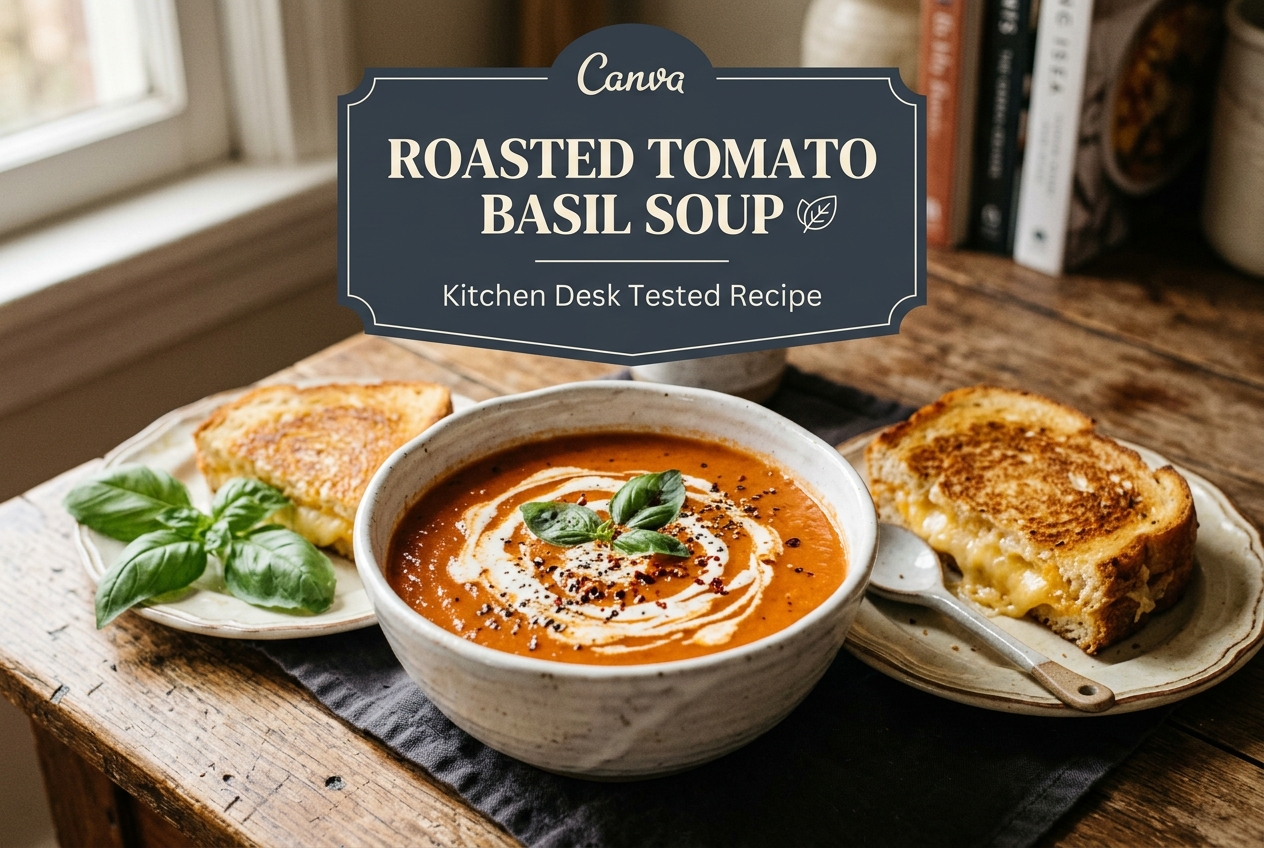
Tomato soup is at its best in a warm bowl with something to dunk, and the classic pairing earns its reputation. A grilled cheese on sturdy sourdough, sharp cheddar and plenty of butter, cooked slowly enough that the cheese melts before the bread burns, gives you the fat and the crunch the soup is missing. Cut it into fingers rather than halves so there is more edge per bite. If you would rather skip bread, a folded omelette, a slice of quiche or a cheese and tomato tartine all work on the same logic. Keep the rest of the meal light and clean: a bitter-leaf salad with a sharp vinaigrette cuts the cream better than anything starchy. For the garnish, a swirl of cream, a drizzle of good olive oil, torn basil and grated Parmigiano-Reggiano go on at the table rather than into the pot, since cheese stirred into hot soup turns stringy. To drink, a dry unoaked white or a light red with low tannin works; a Sangiovese or a dry rosé stands up to the acidity better than a big Cabernet.
Reheating Without Splitting the Cream
Refrigerate in an airtight glass container for up to 5 days. Reheat gently over medium-low heat without boiling.