Why Scampi Sauce Breaks, and the Butter Emulsion That Holds It
Shrimp are the least forgiving protein in a home kitchen, and the reason is structural. Their muscle is arranged in short, thin bundles with very little connective tissue, so heat penetrates almost instantly and there is no collagen to melt into gelatin and mask a mistake. The proteins denature in a narrow, unforgiving band: myosin begins to set around 40°C, the flesh turns opaque and firm near 50°C, and by 65°C actin has contracted hard enough to squeeze out a significant share of the shrimp's water. That is the rubbery texture, and it is not reversible. The entire window between raw and ruined is roughly twenty-five degrees, which a hot pan crosses in under two minutes.
There is a reliable visual cue that beats any timer. A raw shrimp lies almost straight; as it cooks the muscle contracts and it curls. At the point where it forms a loose letter C, it is done. If it has closed into a tight letter O, it has gone too far. This works because the curl is caused by the same protein contraction that expels moisture, so the shape is a direct read-out of how far the cooking has progressed. Learning to pull shrimp at C rather than O improves the dish more than any ingredient upgrade.
A short brine in salt and baking soda is the professional trick that transforms supermarket shrimp, and it works through two separate mechanisms. The salt does what brine always does: it partially denatures the surface proteins so they hold onto water more effectively during cooking, meaning less moisture is expelled and the shrimp stay plump. The baking soda does something different and more interesting. It raises the pH at the surface, and an alkaline environment makes it harder for proteins to bond tightly to each other. Loosely bonded proteins cannot contract as forcefully, so the flesh stays tender while still developing that characteristic snap. Fifteen minutes is enough; past thirty the texture starts to turn faintly slippery and soapy.
The sauce is where most scampi recipes quietly fail, because melted butter is not a sauce — it is oil and water that happen to be in the same pan. Butter is an emulsion to begin with, roughly 81% fat suspended with 16% water, held together by milk proteins and phospholipids. Heat it aggressively and that emulsion breaks: the fat pools and the water evaporates or separates. To build a sauce that stays glossy you need to re-emulsify it deliberately, and that requires three things — an emulsifier, agitation, and controlled temperature. Add cold butter a cube at a time to a liquid held below a simmer, swirling continuously, and the fat disperses into droplets small enough to stay suspended.
The emulsifier that makes this reliable is starch, which is why pasta water matters so much. Water that has cooked pasta carries dissolved and gelatinised amylose and amylopectin, and those long starch molecules physically get in the way of fat droplets finding each other and coalescing. They also thicken the liquid slightly, which slows droplet movement and further stabilises the mixture. This is the same principle behind cacio e pepe and carbonara. Use the cloudiest water you can get — cook the pasta in less water than usual to concentrate it, and never rinse it.
Garlic rewards attention to both cut and temperature. Intact garlic contains alliin and a separate enzyme, alliinase, held apart inside the cells. Damaging those cells brings them together and produces allicin, the compound responsible for garlic's pungency, and the finer the cut the more of it forms — which is why minced garlic is far sharper than sliced. Heat then determines what happens next. Held gently around 120 to 140°C in fat, garlic's sugars and amino acids brown slowly into sweet, mellow, nutty compounds. Pushed past roughly 160°C, or left in the pan while it dries out, it scorches into acrid pyrazines that taste bitter and cannot be corrected. Slice rather than mince, add it to warm rather than screaming-hot fat, and take it to pale gold and no further.
Shrimp Size, Count and Sear Time
| Size Label | Count per 450g | Sear Time per Side | Best Use Here |
|---|---|---|---|
| Small | 51-60 | 30-40 seconds | Too small for scampi; they overcook before they colour |
| Medium | 41-50 | 45-60 seconds | Workable, but you lose the meaty bite |
| Large | 31-40 | 60-75 seconds | Good everyday choice and usually the best value |
| Extra Large (Recommended) | 26-30 | 75-90 seconds | The sweet spot — enough mass to stay juicy, fast enough to sear |
| Jumbo | 21-25 | 90-120 seconds | Excellent but pricier; halve them lengthwise if serving over pasta |
| Colossal | U-15 | 2-3 minutes | Better grilled whole than cut into a pasta dish |
Ingredients
Checklist- 700g Extra Large Shrimp (26-30 count), peeled and deveined, tails optional
- 1 tsp Fine Sea Salt plus 1/2 tsp Baking Soda (for the brine)
- 400g Linguine or Spaghetti
- 8 cloves Fresh Garlic, thinly sliced (not minced)
- 120ml Dry White Wine (Pinot Grigio, Sauvignon Blanc or dry Vermouth)
- 170g Cold Unsalted Butter, cut into cubes
- 2 tbsp Extra Virgin Olive Oil
- 1 Lemon — zest finely grated, then juiced
- 1/2 tsp Red Chilli Flakes
- 20g Fresh Flat-Leaf Parsley, roughly chopped
- Freshly cracked black pepper and flaky salt to finish
Step-by-Step Method
- 1 Brine the Shrimp: Pat the shrimp dry, then toss with the fine salt and baking soda in a bowl. Refrigerate exactly 15 minutes — set a timer, because past 30 minutes the texture turns slippery. Rinse briefly under cold water, then dry thoroughly on paper towels. Dry shrimp sear; wet shrimp steam.
- 2 Start the Pasta: Bring a pot of water to the boil and salt it well, but use about a third less water than you normally would. Less water means more concentrated starch, and that starch is what will hold your sauce together. Cook the pasta two minutes short of the package time and reserve 350ml of the cloudy water before draining.
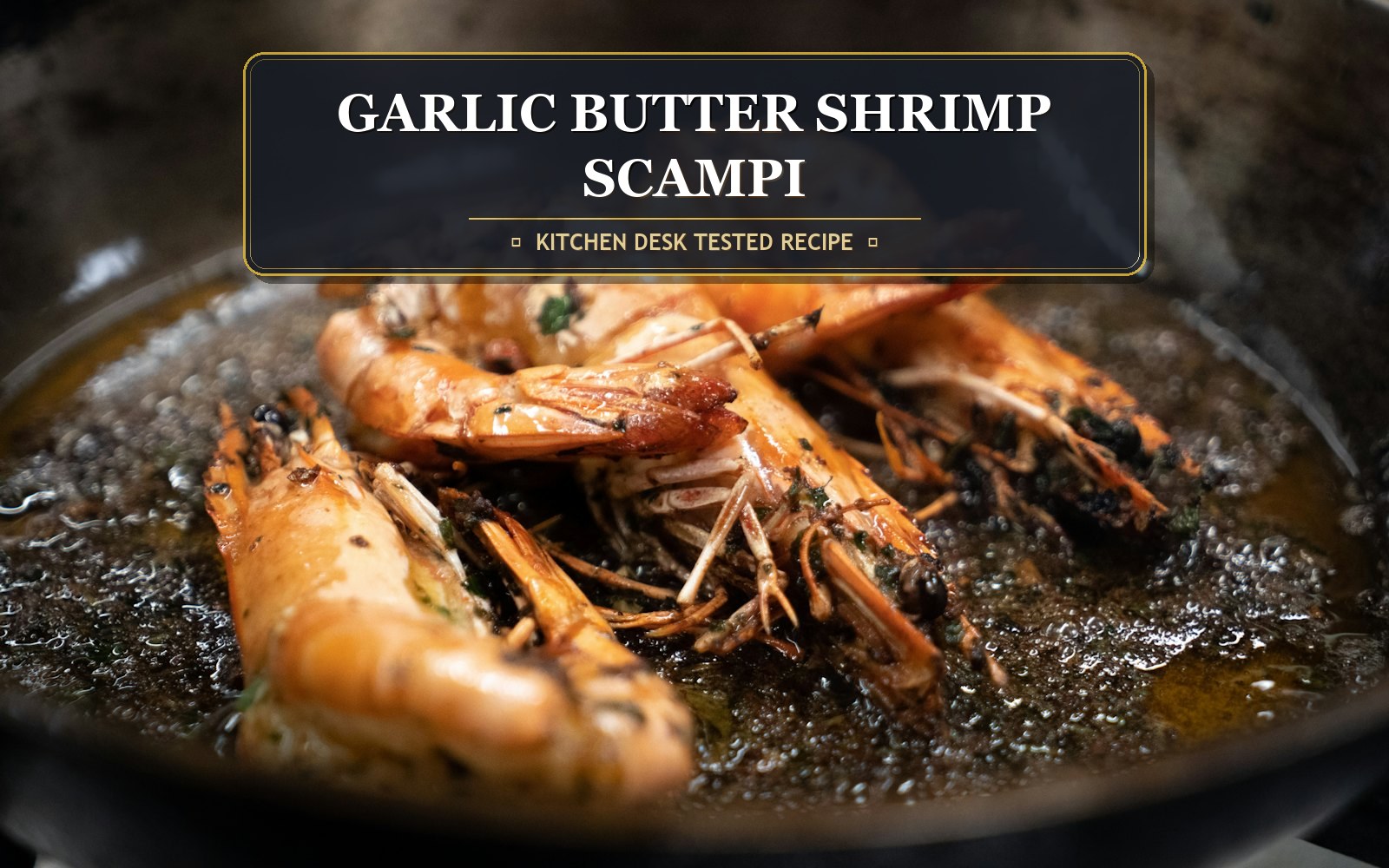
- 3 Sear the Shrimp: Heat the olive oil in the skillet over medium-high until it shimmers. Lay the shrimp in a single uncrowded layer — work in two batches if needed. Sear 75 to 90 seconds per side, until just opaque and curled into a loose C. Remove to a plate immediately. They will be slightly underdone and that is correct; they finish in the sauce.
- 4 Bloom the Garlic: Drop the heat to medium-low and wait thirty seconds for the pan to come down. Add the sliced garlic and chilli flakes and cook, stirring, for 60 to 90 seconds until the garlic is pale gold and fragrant. Do not let it colour past that or the whole dish will taste bitter.
- 5 Deglaze and Reduce: Pour in the wine and scrape the base of the pan to lift the fond. Let it reduce by roughly half, about 2 minutes, until the harsh alcohol smell has cooked off and what remains smells sweet and winey.
- 6 Build the Emulsion: Lower the heat so the liquid is steaming but not simmering. Add 120ml of the reserved pasta water, then start adding the cold butter two cubes at a time, swirling the pan constantly and waiting for each addition to disappear before adding more. The sauce will thicken and turn glossy and opaque. If it ever looks oily or split, pull it off the heat and swirl in a splash more pasta water.
- 7 Bring It Together: Add the drained pasta and toss hard for a full minute so the strands absorb sauce and finish cooking. Return the shrimp with any juices from the plate, then add the lemon zest, lemon juice and parsley off the heat. Loosen with more pasta water until the sauce coats a strand and slides slowly. Finish with flaky salt and black pepper and serve immediately.
Diagnosing a Disappointing Scampi
| What Went Wrong | Most Likely Cause | The Fix Next Time |
|---|---|---|
| Shrimp are rubbery | Cooked past the C shape, or cooked twice | Pull at a loose C while slightly underdone and let the residual heat of the sauce finish them |
| Sauce separated into oil and water | Butter added to liquid that was too hot, or added too fast | Hold the pan below a simmer and add cold butter two cubes at a time, swirling continuously |
| Sauce is thin and pools on the plate | Pasta water was too dilute or too little was used | Cook the pasta in a third less water and reserve 350ml of the cloudiest water you can get |
| Everything tastes bitter | Garlic scorched past gold | Drop the heat before the garlic goes in and take it only to pale gold, 60 to 90 seconds |
| Shrimp steamed grey instead of searing | Pan was crowded, or shrimp were still wet from the brine | Dry them thoroughly and sear in two batches with space between each piece |
| Tastes flat despite enough salt | Lemon juice added early and cooked off | Add zest and juice off the heat at the very end; acid is volatile and fades with heat |
The Pan and the Timing Tools
Test Kitchen Notes
Scampi, Scampied and Other Directions
Skip the pasta entirely and serve the shrimp and sauce in a shallow bowl with thick grilled sourdough for mopping. Replace the pasta water with 120ml of chicken or shellfish stock plus a teaspoon of cornflour slurry so the emulsion still has something to grip.
Add 200g of halved cherry tomatoes after the garlic and cook until they collapse, roughly four minutes, before deglazing. Double the chilli flakes. The tomatoes add acid and body, so cut the lemon juice by half or the dish tips sour.
Whisk 80ml of double cream into the reduced wine before the butter. The cream makes the emulsion nearly foolproof because milk proteins are powerful stabilisers, at the cost of some of the bright, clean character of the original.
Add 500g of scrubbed clams to the pan after deglazing, cover, and steam for four to five minutes until they open. Discard any that stay shut, then proceed with the butter. The clam liquor is intensely savoury, so hold back on salt until you have tasted the finished sauce.
What to Serve With Shrimp Scampi
Scampi is best served the moment it leaves the pan, in warmed shallow bowls rather than on flat plates so the sauce gathers rather than running to the edges. Bring the pan to the table if you can — the dish loses noticeably in the two minutes it takes to plate carefully. Grilled or griddled bread is not optional in most households; something with an open crumb and a firm crust, rubbed with a cut garlic clove while still hot. Because the sauce is rich with butter and sharp with lemon, the rest of the meal should stay simple and green. A plain rocket salad dressed only in olive oil and lemon works better than anything more constructed, as does blanched broccolini, blistered green beans, or steamed asparagus in season. Avoid heavy sides and avoid cheese; parmesan on a delicate shellfish sauce flattens it, which is why Italian kitchens traditionally leave it off. For wine, pour the same bottle you cooked with — a crisp unoaked white with real acidity, such as Pinot Grigio, Vermentino, Picpoul or a dry Riesling. Anything oaked or buttery competes with the sauce instead of cutting it. A dry cider or a plain sparkling water with lemon does the job just as well.
Reheating Shrimp Without Turning It to Rubber
This is a dish to cook and eat, not to cook and keep. Shrimp have already passed through their narrow cooking window once, and any reheating pushes them into the contracted, rubbery state that no technique can undo. If you know in advance that you want leftovers, cook the pasta and sauce fully but sear only the shrimp you intend to serve, and keep the rest raw in the brine for no more than a day. Should you end up with leftovers anyway, refrigerate them in an airtight container for up to two days and accept that the shrimp will be firmer. Reheat as gently as possible: a covered pan over low heat with a splash of water or stock, moved constantly, for three or four minutes at most — never a microwave, which heats unevenly and turns the shrimp to erasers in seconds. The sauce will have solidified and may look broken; a spoonful of hot water and vigorous stirring off the heat usually brings it back. Leftover scampi is genuinely good cold the next day, chopped and folded through a salad with more lemon, which sidesteps the reheating problem entirely. Do not freeze the finished dish; both the shrimp and the emulsion suffer badly.