Why Carbonara Scrambles, and How to Stop It
Carbonara is an emulsion, and emulsions fail at predictable temperatures. An egg yolk is mostly water with about 30 percent fat held suspended in it, and lecithin, a phospholipid in the yolk, is what keeps those fat droplets from merging. Warm it gently and the yolk proteins begin to unfold and thicken around 65°C (149°F), which is exactly the sauce setting you are after. Push past roughly 74°C (165°F) and those same proteins cross-link hard, squeezing out the water they were holding, and you get grainy yellow curds sitting in a pool of fat. The entire dish lives inside that nine-degree band. Below it the sauce is raw and runny. Above it you have made scrambled eggs and stirred pasta into them.
The reason carbonara holds together at all is starch. Pasta water is not just water: it is a thin suspension of amylose and amylopectin that came off the pasta as it cooked, and those long molecules do two jobs at once. They thicken the liquid slightly, which slows the fat droplets down so they are less likely to collide and merge. And they coat the droplets and the egg proteins, physically standing between them. That is the same mechanism behind a butter sauce stabilised with pasta water, and behind cacio e pepe. Cook the pasta in roughly two-thirds of the water you normally would so the starch concentrates instead of diluting to nothing, and never rinse the pasta after draining it.
Guanciale is cured pork jowl, and the jowl is the fattiest part of the pig. What comes out of it when you render it slowly is not just fat but a deeply savoury liquid carrying a lot of dissolved cured flavour, and it stays fluid at room temperature rather than setting hard the way beef fat does. That matters for the sauce, because it means the fat can disperse into the egg and starch mixture as small droplets and stay there instead of congealing on the pasta. Rendering it gently over medium-low heat is the whole trick. Cooked fast it browns and tightens before the fat has come out, and you end up with chewy strips in a dry pan. Golden and slightly crisp at the edges, with a good pool of fat underneath, is where you want it.
The practical version of all that is one rule: the eggs never see the burner. Heat the pan, render the pork, boil the pasta, and then take everything off the heat before the egg goes anywhere near it. A stainless bowl sitting on the counter with the hot pasta tipped into it is the right setup, or a bowl held briefly over the warm pan if your kitchen is cold. What you are aiming for is a mixture sitting somewhere around 65 to 74°C (150 to 165°F), hot enough to thicken the yolk into sauce and cool enough that it never curdles. Residual heat from the pasta plus a splash of boiling pasta water will get you there. A probe thermometer in the bowl is genuinely useful for the first few attempts.
Cream is not in this dish and it is not needed, because the recipe already contains a better emulsifier. Lecithin from the yolks, starch from the pasta water and fat from the guanciale make a stable, glossy sauce on their own. Adding cream changes what the sauce is. It dilutes the sharp saltiness of the pecorino, mutes the cured pork, and turns a bright savoury coating into something closer to an Alfredo. It also makes the sauce heavier, so it sits on the pasta rather than clinging to it. If your carbonara seems to need cream, the real problem is almost always that the sauce is too hot or too dry. Add pasta water and take the bowl off the heat instead.
Tossing and stirring are not the same motion, and in this dish the difference matters. Stirring moves the pasta through the sauce. Tossing lifts and folds it, so the sauce is continually redistributed over surfaces that were just exposed to it. A vigorous toss with tongs, lifting the pasta and letting it fall back into the bowl, works the starch and the fat together and coats every strand. A slow stir leaves pools of egg mixture at the bottom. It also matters that the pasta keeps moving the whole time the egg is in contact with it, because any spot sitting still against a warm bowl can overcook before the rest has even warmed up. Thirty to sixty seconds of real tossing is all it takes.
Guanciale, pancetta and bacon are three different products and they behave differently in the pan. Guanciale is cured jowl, heavily marbled, with a pronounced cured flavour and a lot of fat that renders clear and stays liquid. Pancetta is cured belly, leaner and milder, and it firms up more as it cooks, so you get more meat and less sauce to work with. Bacon is smoked and often sugar-cured, which is the real problem: smoke and sweetness are exactly the flavours that fight pecorino and black pepper. If guanciale is unavailable, pancetta is the honest substitute, and you will need a little olive oil alongside it because there is less fat to build the sauce from. Bacon makes a pleasant pasta, but it will not taste like carbonara.
Ingredients
Checklist- 220g (8 oz) Bronze-Die Extruded Spaghetti or Rigatoni
- 120g (4.2 oz) Guanciale (cured pork jowl), cut into 1/4-inch thick strips
- 3 Large Egg Yolks plus 1 Whole Egg (at room temperature)
- 60g (2 oz) Pecorino Romano (or 50/50 Pecorino and Parmigiano-Reggiano), finely grated
- 2 tsp Whole Black Peppercorns, coarsely crushed in a mortar
- Fine sea salt (use sparingly for pasta water, as cheese and guanciale are salty)
Step-by-Step Method
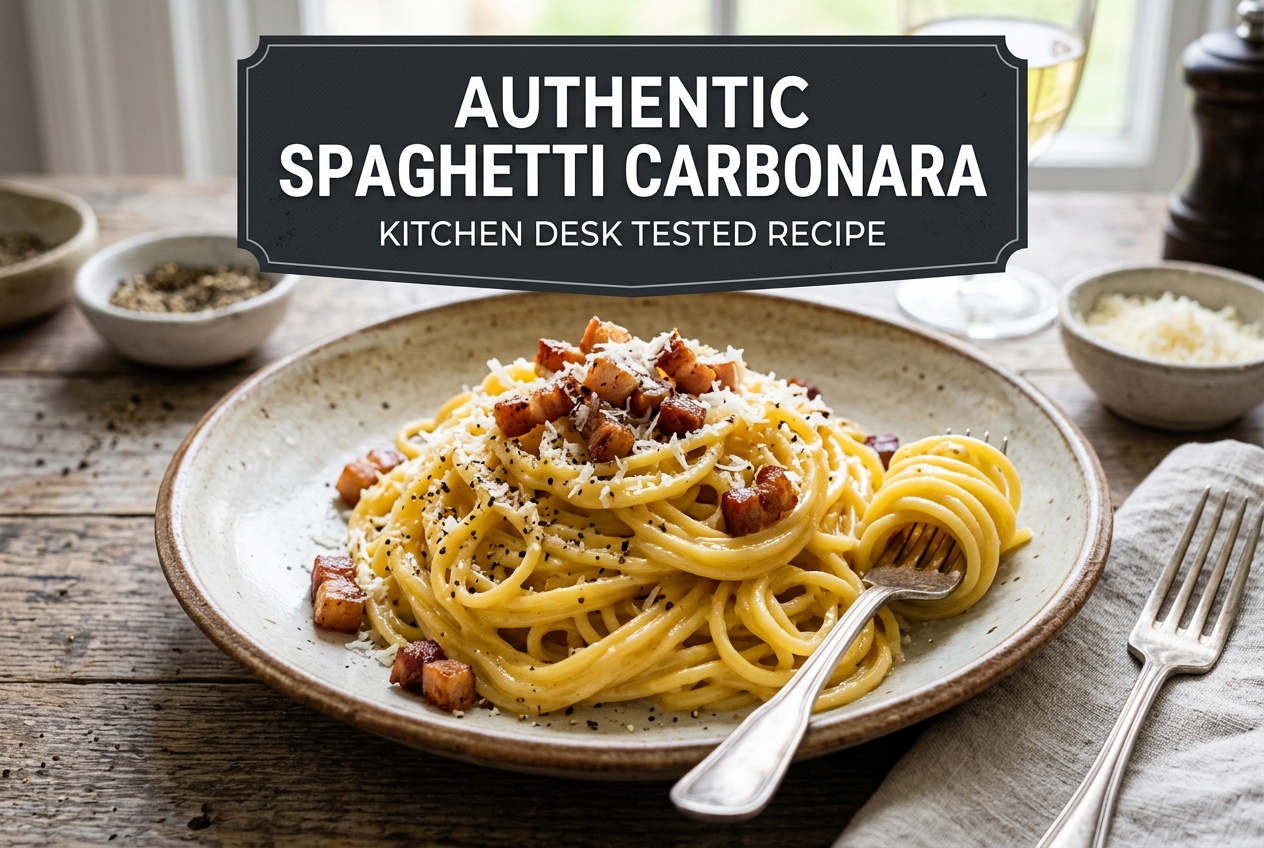
- 1 Render the Guanciale Gently. Place sliced guanciale in a cold skillet over medium-low heat. Cook for 8-10 minutes, allowing the fat to render slowly until the meat turns golden and crisp on the outside but chewy inside. Remove skillet from heat.
- 2 Whisk the Egg and Cheese Carbocream. In a stainless steel mixing bowl, whisk together the 3 egg yolks, 1 whole egg, grated Pecorino Romano, and half of the crushed black pepper. It will form a thick, golden paste.
- 3 Boil Pasta in Concentrated Water. Boil spaghetti in salted water (use half the normal water quantity so starch concentrates) until 2 minutes shy of al dente. Reserve 1 cup of cloudy pasta water.
- 4 Temper Egg Mixture. Drizzle 2 tablespoons of warm rendered guanciale fat and 2 tablespoons of hot pasta water into the egg-cheese bowl, whisking vigorously. This gently raises the egg temperature without cooking it.
- 5 Toss Pasta in the Skillet Fond. Transfer hot al dente pasta directly into the warm skillet with remaining rendered fat and half the crisp guanciale. Toss for 30 seconds to coat pasta strands.
- 6 Emulsify Off the Flame. Transfer the coated pasta into the mixing bowl with the egg-cheese mixture (AWAY from stove heat). Toss and swirl aggressively with tongs, splashing in hot pasta water a tablespoon at a time until a creamy, glossy sauce forms.
- 7 Plate and Garnish. Twirl onto warm bowls. Top with remaining crispy guanciale, extra grated Pecorino, and freshly crushed black pepper. Serve immediately.
How Much Egg and Cheese, Serving by Serving
| Serving Size | Egg Yolks | Whole Eggs | Pecorino Romano | Reserved Pasta Water |
|---|---|---|---|---|
| 2 Servings | 3 Yolks | 1 Whole Egg | 50g (1.7 oz) | 60ml - 80ml |
| 3 Servings | 4 Yolks | 1 Whole Egg | 75g (2.6 oz) | 90ml - 110ml |
| 4 Servings | 6 Yolks | 1 Whole Egg | 100g (3.5 oz) | 120ml - 150ml |
| 6 Servings | 9 Yolks | 2 Whole Eggs | 150g (5.3 oz) | 180ml - 220ml |
| 8 Servings | 12 Yolks | 2 Whole Eggs | 200g (7 oz) | 240ml - 280ml |
| Per Serving (guide) | 1.5 Yolks | 0.3 Whole Egg | 25g (0.9 oz) | 30ml - 40ml |
Key Advantages & Science
- ✓Pure, rich authentic Roman flavor without heavy commercial cream.
- ✓Crispy, savory guanciale fat imparts unmatched cured complexity.
- ✓Fast weeknight execution — cooks in the exact time it takes pasta to boil.
- ✓Rich in natural egg yolk lecithin that coats each pasta strand.
Important Considerations
- !Zero tolerance for high heat: mixing eggs over direct flame will scramble them.
- !Authentic guanciale and Pecorino Romano can be challenging to locate in regular grocery stores.
- !Must be consumed immediately at table; does not hold or reheat well.
Diagnosing a Split or Scrambled Carbonara
| What Went Wrong | Most Likely Cause | The Fix Next Time |
|---|---|---|
| Sauce scrambled into grain or omelette bits | The pasta or the pan was too hot when the egg went in, pushing the mixture past 74°C (165°F) | Never mix the eggs over a burner; use a separate bowl off the heat and let the pasta's residual heat do the work |
| Sauce is dry and sticky | Not enough starchy pasta water was worked in during the final toss | Add hot pasta water a tablespoon at a time while tossing, until the sauce turns fluid and glossy again |
| Sauce is thin, watery and pools at the bottom | Too much water went in, or the cheese was coarsely grated and never dissolved | Microplane the pecorino and add the water gradually rather than all at once; the sauce tightens as it cools |
| Sauce is grainy rather than smooth | Coarsely grated cheese or fridge-cold eggs, so the cheese never fully melted into the mixture | Grate the pecorino on a microplane and let the eggs sit out for twenty minutes before you start |
| It tastes raw and eggy | The mixture never got warm enough to thicken the yolk into a sauce | Toss in hot pasta water a spoonful at a time; the target is 65 to 74°C (150 to 165°F), and a probe in the bowl is worth using the first few times |
| The guanciale is chewy rather than crisp | It was rendered over heat that was too high, so the outside set before the fat had come out | Start it in a cold pan over medium-low and give it a full 8 to 10 minutes; the fat should render clear and the edges just turn gold |
| Sauce turns oily and separates as it sits on the plate | Too much fat and not enough starch water, or the bowl was too hot and the emulsion broke | Toss in another splash of pasta water to bring it back, and serve immediately; carbonara does not hold for more than a minute or two |
The Bowl, the Pan and the Tongs
Notes From Testing: Heat, Timing and Tossing
Pancetta, Rigatoni and Other Directions
Pancetta is cured belly rather than jowl, so it is leaner and milder and renders far less fat. Dice it a little smaller, give it an extra minute or two in the pan, and add a tablespoon of olive oil with it so there is enough fat to build the sauce from.
Short ridged shapes hold more sauce in their grooves than spaghetti does, and the tubes catch the crisp bits of cured pork. Cook them a minute past where you would take them for a plain tomato sauce, since the pasta needs to be fully done by the time it meets the egg.
A Roman variation rather than an invention. Dice one small zucchini and cook it in the guanciale fat until soft and starting to colour, then carry on as normal. It adds sweetness and cuts the richness. Salt it less than you think, since the zucchini releases water and the pecorino is already very salty.
If smoked cured pork is all you can find, use it but cut the pepper back by half. Smoke and black pepper both read as sharp on the tongue, and together they can bury the pecorino completely. Add a little extra cheese at the end to bring the balance back.
What to Serve With Carbonara
Carbonara is a two-minute dish once the pasta is drained, so the table has to be ready before you start: warmed bowls, forks, the wine already open. It does not wait for anyone. Serve it in shallow bowls rather than deep ones, so the sauce stays in contact with the pasta instead of draining to the bottom. The classic Roman accompaniments are simple and mostly raw: a plate of puntarelle or a plain green salad with a sharp vinaigrette, some good bread, and nothing else competing. Do not put extra cheese on the table, because the dish is already carrying a serious amount of pecorino. A dry unoaked white is the traditional pairing, something like Frascati or Verdicchio from Lazio, and a light young red such as Cesanese works if you would rather drink red. Sparkling water with lemon is just as good and arguably more traditional. Skip anything oaked, and either skip dessert or keep it to fruit, because there is nothing light enough to follow this.