What Three Hours Actually Changes
| Phase | Time | Key Transformation |
|---|---|---|
| Sofrito & Meat | 15 mins | Sweating aromatics & gentle browning |
| Wine & Milk Reduction | 30 mins | Wine acidity evaporates, milk tenderizes beef |
| Slow Braise | 3 hours | Gelatin breaks down into thick, glossy ragù |
| Pancetta Render | 5 mins | Fat renders out to become the cooking medium |
| Tomato Paste Toast | 2 mins | Paste darkens, losing raw acidity and gaining depth |
| Final Rest | 10 mins | Fat and gelatin re-emulsify into a glossy sauce |
Why Milk Instead of Cream, and Why It Goes In Early
Bolognese is a meat sauce, not a tomato sauce. Cooking the minced meat in whole milk before adding tomatoes allows milk lactic acid and calcium to break down collagen fibers, keeping the beef exceptionally tender throughout the subsequent hours of acidic tomato simmering.
That distinction is the single most important thing to understand about this dish, and it is where nearly every home version goes wrong. The registered recipe held by the Accademia Italiana della Cucina contains a single tablespoon or two of tomato paste and a small quantity of passata against nearly 600g of meat. Tomato is a seasoning here, providing acidity and glutamate to deepen the meat flavour, not the body of the sauce. What you should end up with is a sauce that is brown flecked with orange rather than red, and that reads as meat first and tomato a distant second.
The milk step is genuinely doing chemistry and not just adding richness. Milk sits at a pH of about 6.7, essentially neutral, and collagen — the connective tissue that makes minced meat feel grainy and tough — hydrolyses into gelatin far more readily in a neutral environment than an acidic one. Add tomatoes at the start and the pot drops to around pH 4.2, where collagen breakdown slows dramatically and the muscle proteins tighten instead. By giving the meat thirty minutes in milk first, you convert much of that collagen to gelatin before the acid arrives, and gelatin is what gives a long-cooked ragù its glossy, lip-coating body.
Milk's calcium and its enzymes contribute as well. Calcium ions help destabilise the protein structures holding muscle fibres together, and the milk proteins themselves brown during the reduction, adding a layer of Maillard flavour that has nothing to do with the meat. As the milk reduces it will look curdled and slightly unappealing; this is normal and correct — the casein is coagulating in the mild acidity of the pan — and those curds dissolve invisibly into the sauce over the following hours.
Cooking the meat gently until pale rather than searing it hard is deliberate and counterintuitive. A hard sear develops Maillard flavour but it also seals the surface of every fragment of mince and drives out moisture, and mince that has been browned aggressively stays slightly gritty no matter how long it simmers. Bolognese wants its meat soft and its flavour built from the sofrito, pancetta, wine and long reduction instead. This is one of the few places in cooking where deliberately not browning gives the better result, and it is why authentic bolognese tastes softer and rounder than the sharply savoury sauce most people expect.
The sofrito is the flavour foundation and it needs more time than people give it. Onion, carrot and celery in roughly a 2:1:1 ratio release sugars as they sweat, and ten to fifteen minutes over gentle heat converts enough of those sugars to give the finished sauce a background sweetness that balances the tomato's acidity. Rush it and the vegetables stay raw-tasting and the sauce needs sugar added later to compensate. Mince the vegetables finely — they are meant to disappear into the sauce, not appear as identifiable chunks.
White wine rather than red is the other choice that surprises people. Bologna is in Emilia-Romagna, historically white wine country, and dry white contributes acidity and fruit without the tannins and heavy colour red brings. Tannins bind to proteins and can leave a faintly astringent edge over a three-hour simmer, while red wine's pigments push the sauce toward the tomato-red colour it is not supposed to have. Either works, but white is the traditional and, for this style, the cleaner choice.
The three hours are not padding. Collagen conversion to gelatin is a slow reaction that proceeds meaningfully only above about 70°C and continues for as long as you hold it there, which is why a barely-there simmer over hours produces a texture that no amount of high heat achieves in one. Meanwhile water evaporates, concentrating glutamates from the meat, tomato and pancetta, and the free amino acids continue combining with sugars to build savoury depth. A lid left slightly ajar is the right compromise: enough evaporation to concentrate, slow enough that the sauce does not need constant topping up.
Key Advantages & Science
- ✓Melt-in-your-mouth tenderness
- ✓Freezes beautifully for up to 3 months
- ✓Rich, complex, authentic Italian flavor
- ✓Almost entirely hands-off once the braise starts
- ✓Tastes noticeably better on the second day
Important Considerations
- !Requires 3 hours of slow simmering
- !Not a weeknight sauce unless made in advance
- !Needs three cuts of meat plus pancetta for full depth
- !Looks and tastes nothing like the red sauce most people expect
The Heavy Pot and the Rest of It
Ingredients
Checklist- 300g Ground Beef (80/20)
- 200g Ground Pork
- 100g Pancetta (diced)
- 1 Onion, 1 Carrot, 1 Celery stalk (minced)
- 1 cup Milk
- 1 cup Dry White Wine
- 2 tbsp Tomato Paste
- 1 can (400g) San Marzano Tomatoes
- Broth, Nutmeg, Salt
- 2 tbsp Butter or Olive Oil
- Parmigiano-Reggiano rind (optional)
Step-by-Step Method
- 1 Render Pancetta: Cook the diced pancetta in the Dutch oven over medium-low heat until crisp and the fat has rendered out, about 6-8 minutes. Do not rush this — the rendered fat becomes the cooking medium for everything that follows, and pancetta added later never gives up its fat properly.
- 2 Sofrito: Add the minced onion, carrot, and celery. Cook 10-15 minutes over medium-low heat until genuinely soft and sweet, stirring occasionally. They should collapse and turn translucent, not brown; colour here means the heat is too high.
- 3 Meat: Add the beef and pork, breaking them up with a wooden spoon, and cook gently until pale and no longer pink. Resist browning — this is the step people get wrong. You want the meat cooked through and soft, around 8-10 minutes over medium-low.
- 4 Wine: Add the white wine and simmer until fully evaporated, roughly 10 minutes. Scrape the base as you go to lift anything stuck. The pan should smell of wine when you add it and of nothing much when it is done.
- 5 Milk: Add the milk and a generous grating of nutmeg, then simmer gently until reduced and barely any liquid remains, about 20 minutes. The mixture will look curdled; this is exactly right and it will smooth out later.
- 6 Tomato: Stir in the tomato paste and cook it for two minutes until it darkens a shade, then add the crushed San Marzano tomatoes and enough broth to just cover. Add the Parmigiano rind now if you have one.
- 7 Simmer: Bring to the barest simmer, then cover with the lid slightly ajar and cook on the lowest heat for 3 hours, stirring every 30 minutes or so. Add a splash of broth or water if it tightens too much. It is done when the fat separates out at the edges and the sauce is glossy and thick.
- 8 Rest & Finish: Remove the rind, take the pot off the heat, and let it stand 10 minutes. Stir vigorously to re-emulsify the separated fat back into the sauce, then taste and season. It will need more salt than you think.
Ragù Problems and How to Correct Them
| Symptom | Underlying Cause | Fix |
|---|---|---|
| Sauce tastes sharp and acidic | Too much tomato, or paste not toasted | Use tomato as seasoning; toast the paste before liquids |
| Meat is grainy and tough | Meat browned hard, or tomato added before milk | Cook meat gently to pale; always milk before tomato |
| Thin and watery after 3 hours | Lid fully closed, so nothing evaporated | Leave the lid ajar; finish uncovered for 20 minutes |
| Greasy pools that will not blend | Sauce not rested and stirred at the end | Rest 10 minutes off heat, then stir hard to re-emulsify |
| Bitter background note | Sofrito browned, or garlic burnt | Sweat the vegetables gently without colour |
| Tastes flat despite long cooking | Under-salted, no pancetta or cheese rind | Season at the end; add a Parmigiano rind while simmering |
| Scorched on the bottom | Heat too high, or pot too thin | Use a heavy pot on the lowest flame; a diffuser helps |
Test Kitchen Notes
Better on Day Two: Storage and Reheating
This is a sauce that rewards being made ahead, so plan for leftovers rather than treating them as an afterthought. Cool it to room temperature within two hours, then refrigerate in an airtight container for up to four days — the flavour improves markedly over the first day or two as the gelatin sets and the fat redistributes. A layer of solidified fat on top is normal and can be stirred back in when reheating, or lifted off if you want a leaner sauce. Reheat gently in a saucepan over low heat with a splash of water, broth or milk to loosen it, stirring until it is glossy again; a microwave works but tends to break the emulsion, so stir it well afterwards. It freezes exceptionally well for up to three months, and freezing in portion-sized flat bags means it thaws in minutes rather than hours. Thaw overnight in the refrigerator, or straight from frozen into a covered pan over low heat. Do not refreeze once thawed. Never freeze it already tossed with pasta — the pasta turns to mush — and if you are making lasagne with frozen sauce, thaw it fully first so the bake time stays predictable. Portioning before freezing is the single best habit here: three hours of work becomes six weeknight dinners.
White Ragù, Game and Vegetarian Versions
Leave the tomatoes out entirely and use extra broth and a splash more milk in their place. Without tomato acidity the meat and sofrito come forward completely, giving a pale, deeply savoury sauce that is exceptional over fresh pappardelle with a lot of Parmigiano. This is closer to what the dish looked like before tomatoes became common in northern Italy.
Finely chop 100g of chicken livers and add them with the mince. They dissolve completely over three hours, leaving no identifiable liver flavour but a remarkable mineral depth and a darker colour. A traditional Emilian addition, and the single most effective upgrade to this recipe if you are not squeamish.
This ragù is the correct filling for a real lasagne. Layer it with fresh spinach pasta sheets and béchamel — not ricotta and not mozzarella — with Parmigiano between the layers, and bake at 190°C for 40 minutes. One batch of this sauce makes a generous lasagne for six.
Replace the beef and pork with 500g of dark turkey mince and add 200g of finely chopped cremini mushrooms with the sofrito. The mushrooms supply the glutamates and body the fattier meats would have contributed. Keep the pancetta if you can — it matters more here, since the leaner meat brings less of its own fat.
The Pasta That Carries It, and What Else
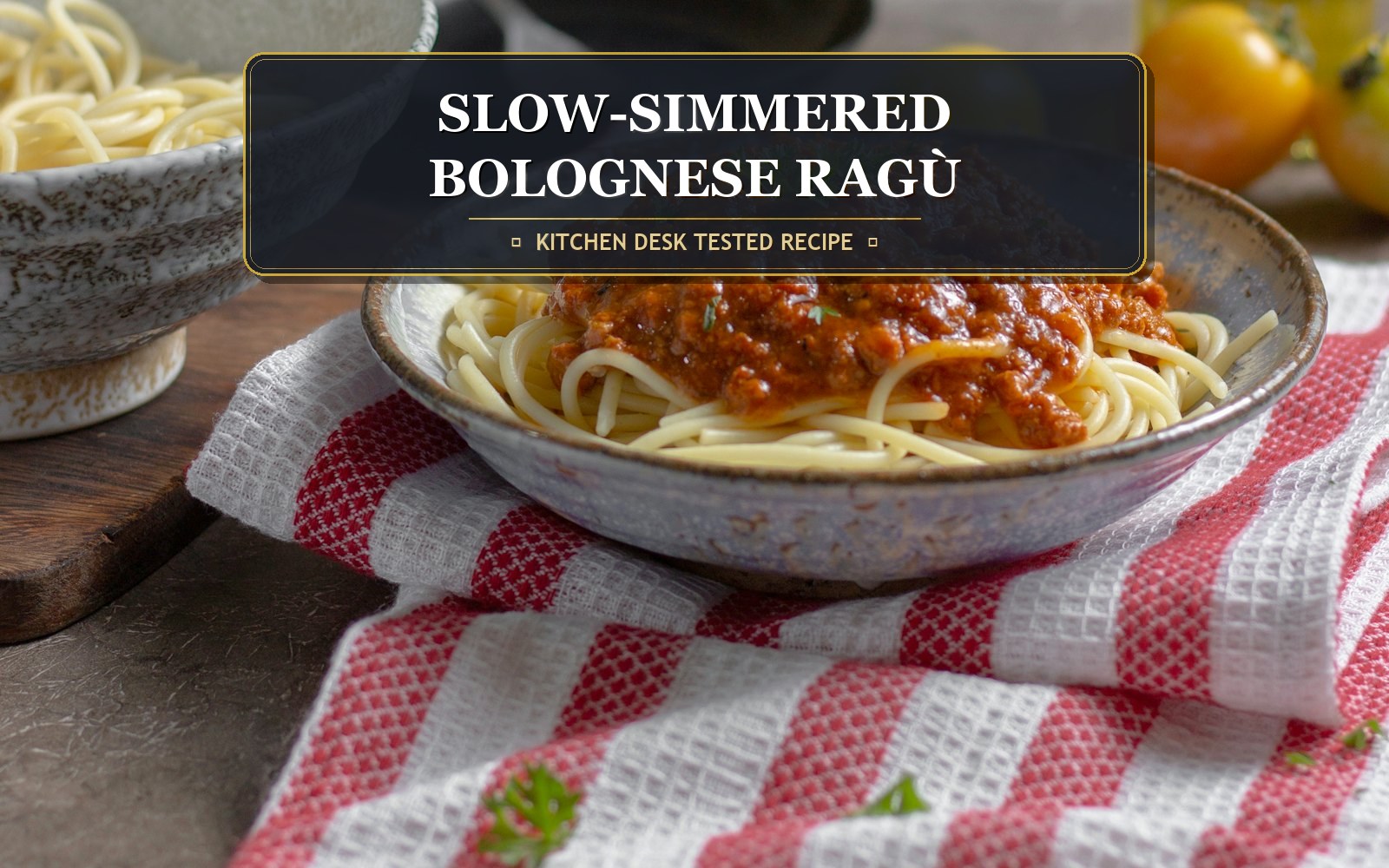
In Bologna this sauce is served with fresh egg tagliatelle and very little else, and there is a reason it has not changed: the wide, porous ribbons of egg pasta hold a heavy meat sauce in a way that round, dry spaghetti simply cannot. Pappardelle works equally well, as do fresh garganelli and rigatoni if you want a tube shape. Allow roughly 100g of dry pasta or 130g of fresh per person and around 150g of sauce — the ratio should look like dressed pasta rather than pasta drowning in sauce. Toss the drained pasta in the pan with the ragù and a ladle of starchy cooking water for a minute before serving, so the two become one dish rather than two layers. Finish at the table with freshly grated Parmigiano-Reggiano and nothing more; no basil, no garlic bread, no extra oil. Beyond pasta it is the correct filling for lasagne alla Bolognese, excellent over soft polenta, and very good spooned onto baked potatoes or under a layer of mash. Serve it in warmed bowls, since a fatty sauce tightens fast on cold china, and drink a Sangiovese, a Barbera or, most traditionally, a chilled sparkling Lambrusco, whose acidity cuts the richness better than any still red.