Starch, Agitation and Why There Is No Cream in This
Everything that makes risotto creamy comes out of the rice itself. Risotto varieties are unusually high in amylopectin, the branched starch molecule that dissolves readily into hot liquid and thickens it, and comparatively lower in amylose, the straight-chain starch that stays put and keeps grains separate. When you add warm stock a ladle at a time and stir, two things happen simultaneously: the liquid gelatinises starch at the surface of each grain, and the friction of grains rubbing against each other and the pan physically abrades that gelatinised layer off into the surrounding liquid. What accumulates is a genuine starch suspension with the body of a light cream. Add all the stock at once and you skip the abrasion entirely — the rice simply boils, and you get soup with rice in it.
The choice of rice determines how much margin for error you have. Carnaroli, often called the king of risotto rices, has a higher amylose content in its core than Arborio, which means the centre of the grain resists breaking down and holds a distinct bite even after the exterior has released plenty of starch. Arborio releases starch faster and more generously but goes from perfect to blown out in about ninety seconds, which is why restaurants overwhelmingly choose Carnaroli. Vialone Nano sits between them with a shorter, rounder grain and the fastest cooking time. What none of them tolerate is substitution with long-grain rice, which is high in amylose and low in amylopectin and will never produce creaminess no matter how long you stir.
Toasting the rice — the tostatura — is a step people skip and should not. Two or three minutes in hot fat before any liquid goes in does three separate things. It drives residual surface moisture off and lightly toasts the exterior starch into nutty, roasted flavour compounds through the Maillard reaction. It coats each grain in a thin film of fat, which slows water penetration slightly and gives you a wider window before the grain bursts. And it firms the outer layer just enough that the grains keep their shape through half an hour of stirring rather than disintegrating into paste at the twenty-minute mark.
Mushrooms are the most reliable source of umami in a vegetarian kitchen, and the reason is a chemical synergy rather than any single compound. Mushrooms are rich in free glutamate, which the tongue reads as savoury, and dried mushrooms in particular are dense in guanosine monophosphate, a nucleotide. When glutamate and nucleotides occur together the perceived savouriness is not additive but multiplicative — laboratory measurements put the amplification as high as eight-fold. This is why a handful of dried porcini transforms a dish made with ordinary cultivated mushrooms, and why the soaking liquid is more valuable than the porcini themselves. Strain it carefully; the grit settles at the bottom.
Browning fresh mushrooms requires patience with water. A mushroom is roughly 90% water by weight, and as long as that water is evaporating from the surface the temperature cannot climb above 100°C, which is far below the 140°C or so where the Maillard reaction begins in earnest. So mushrooms in a pan go through two distinct phases: first they release liquid and steam in it, then once the pan is dry they finally begin to brown. Crowding the pan extends phase one indefinitely, which is why a heap of mushrooms can cook for fifteen minutes and stay grey and rubbery. Cook them in a wide pan in batches, resist stirring, and salt them only after they have browned, since salt drawn water out early prolongs the steaming phase.
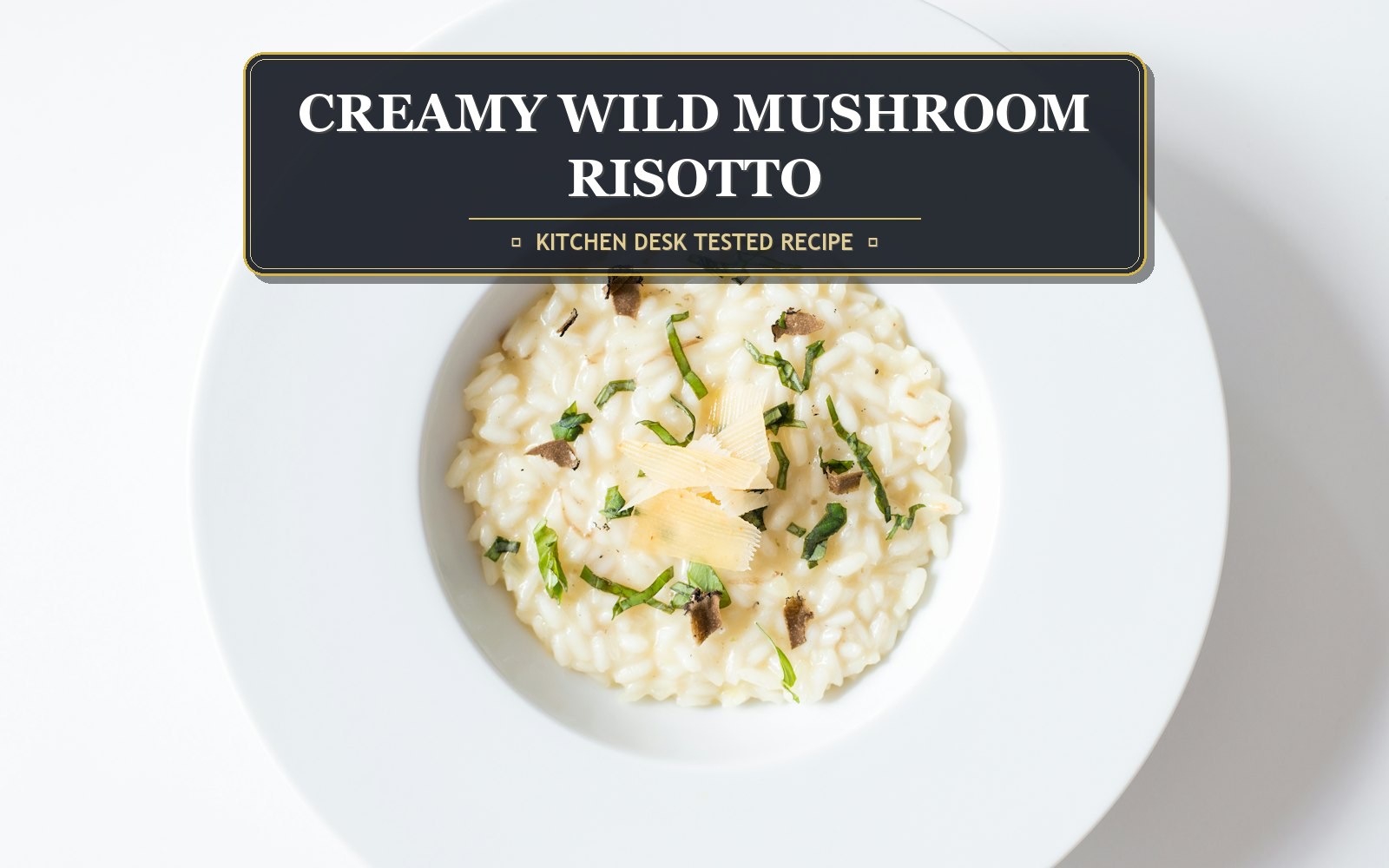
The final step, mantecatura, is an emulsification and it must happen off the heat. Cold butter and finely grated parmesan are beaten vigorously into the finished rice, and the starch already suspended in the liquid acts as the emulsifier that holds the butterfat in suspension. Off the heat matters for two reasons: parmesan proteins tighten and turn stringy above about 70°C, and an over-hot emulsion simply splits into oil and starchy water. Done correctly the risotto becomes glossy and loose enough to move — all'onda, meaning in waves, is the Italian test. Tilt the pan and a properly finished risotto should ripple and slowly settle flat. If it holds a mound, it is too thick, and a splash of hot stock fixes it.
Risotto Rice Varieties Compared
| Variety | Starch Behaviour | Cook Time | Best For |
|---|---|---|---|
| Carnaroli (Recommended) | High amylose core, generous surface release | 18-20 mins | The most forgiving — holds a firm bite well past doneness |
| Arborio | Fast, heavy starch release | 16-18 mins | Widely available and very creamy, but overcooks quickly |
| Vialone Nano | Rapid release, small round grain | 14-16 mins | Seafood risottos and anything you want soupier |
| Baldo | Moderate release, very absorbent | 16-18 mins | Absorbs strongly flavoured stocks; good budget option |
| Bomba / Calasparra | Low release, high absorption | 18-20 mins | Paella, not risotto — it will not turn creamy |
| Long-Grain or Basmati | High amylose, minimal release | Not suitable | Avoid entirely; no amount of stirring creates creaminess |
Key Advantages & Science
- ✓Genuinely creamy from starch and technique alone, with no cream and no flour.
- ✓Built almost entirely from pantry staples plus whatever mushrooms are cheapest.
- ✓Dried porcini give a depth of flavour normally associated with long-cooked meat dishes.
- ✓One pan, and the technique transfers directly to every other risotto you will ever make.
Important Considerations
- !Demands roughly 25 minutes of near-continuous attention at the stove.
- !The window between perfectly al dente and blown out is about 90 seconds with Arborio.
- !Does not hold or reheat well — risotto is a dish you serve the moment it is finished.
The Pan, the Ladle and the Stirring
Ingredients
Checklist- 320g Carnaroli or Arborio Rice
- 25g Dried Porcini Mushrooms
- 400g Fresh Mushrooms (chestnut, cremini or a mix), sliced 5mm thick
- 1.4 litres Chicken or Vegetable Stock, kept at a bare simmer
- 1 medium Onion or 2 Shallots, very finely diced
- 2 cloves Garlic, minced
- 150ml Dry White Wine
- 100g Cold Unsalted Butter, cubed (60g for the mantecatura)
- 80g Parmigiano-Reggiano, finely grated, plus more to serve
- 2 tbsp Olive Oil
- Fresh thyme, flat-leaf parsley, salt and black pepper
Step-by-Step Method
- 1 Rehydrate the Porcini: Cover the dried porcini with 300ml of just-boiled water and leave 20 minutes. Lift them out, squeeze gently, and chop. Strain the soaking liquid through a coffee filter or fine cloth, leaving the last spoonful and its grit behind, then add the strained liquid to your stock pot. This is the single biggest flavour contributor in the dish.
- 2 Brown the Fresh Mushrooms: Heat 1 tbsp oil in the wide pan over medium-high. Add the fresh mushrooms in a single layer — in two batches if they do not fit — and leave them undisturbed for 3 minutes before stirring. They will release water and steam first; once the pan is dry they will begin to brown, about 8 minutes total. Salt them only now, add the thyme, then remove to a bowl.
- 3 Toast the Rice (Tostatura): In the same pan add the remaining oil and 40g of the butter, then the onion, and sweat over medium-low for 5 minutes until translucent but not coloured. Add the garlic for 30 seconds. Add the rice and stir constantly for 2 to 3 minutes until the grains are hot, faintly translucent at the edges with an opaque white centre, and smell nutty. Do not let them brown.
- 4 Deglaze with Wine: Pour in the wine and stir until it has almost completely disappeared, about 90 seconds. The pan should sound dry when you scrape it. This drives off raw alcohol and leaves the acidity that keeps a rich dish from tasting flat.
- 5 Add Stock in Ladles: Add a ladle of hot stock — just enough to cover the rice — and stir steadily. When you can drag the spoon across the base and it leaves a trail that closes slowly, add the next ladle. Repeat for 16 to 20 minutes. Keep the stock hot throughout; cold liquid stalls starch gelatinisation and stretches the cooking time badly.
- 6 Judge Doneness by Bite: From 16 minutes, taste every 90 seconds. You want the grain tender through with the faintest firm resistance dead centre — not chalky, not uniformly soft. Stir the chopped porcini and the browned mushrooms back in at this point, along with a final ladle of stock so the mixture is slightly looser than you want to serve it.
- 7 Mantecatura, Off the Heat: Take the pan off the heat entirely and wait thirty seconds. Add the remaining 60g of cold cubed butter and all the parmesan and beat vigorously with the spoon for a full minute. The risotto will go glossy, silky and noticeably looser. Check salt and pepper, cover and rest 2 minutes, then serve — tilting the pan, it should ripple in slow waves rather than sit in a mound.
Reading the Rice: Notes From Testing
Diagnosing Risotto Problems
| What Went Wrong | Most Likely Cause | The Fix Next Time |
|---|---|---|
| Grainy and never turned creamy | Stock added all at once, or too little stirring | Add stock one ladle at a time and stir steadily; friction is what releases the starch |
| Gluey and stodgy like rice pudding | Overcooked, or the rice was stirred hard after it was already done | Taste from 16 minutes and stop at the first firm centre; Carnaroli buys you more margin |
| Mushrooms grey and rubbery | Pan crowded so they steamed instead of browning | Cook in a wide pan in two batches, undisturbed, and salt only after they colour |
| Rice still chalky inside after 25 minutes | Cold stock used, which repeatedly dropped the pan temperature | Hold the stock at a bare simmer in a separate pan the whole time |
| Sauce split and looks oily | Butter and cheese added while the pan was still on heat | Pull it off the heat, wait 30 seconds, then beat the cold butter and parmesan in |
| Tastes rich but flat and heavy | Wine or acid missing, or wine not reduced properly | Reduce the wine until the pan sounds dry; finish with a squeeze of lemon if needed |
Mushrooms, Seasons and Other Directions
Omit the mushrooms entirely and steep a generous pinch of saffron threads in the first ladle of hot stock. Traditionally finished with beef marrow alongside the butter. The dish becomes about the saffron, so use good threads rather than powder and add them early enough to bloom fully.
Replace half the parmesan with 80g of Taleggio cut into small cubes, added during the mantecatura, and finish with a few drops of real truffle oil or shavings of fresh truffle. Taleggio melts into something extraordinarily silky but is much saltier than parmesan, so pull back on seasoning earlier.
Swap the rice for 300g of pearl barley and extend the cooking to 35-40 minutes with roughly 300ml more stock. Barley releases less starch, so the result is nuttier and chewier and less creamy; compensate with an extra 20g of butter in the mantecatura.
Use a dry red wine such as Barbera in place of the white, and stir 200g of shredded radicchio in during the last five minutes. The rice takes on a deep purple colour and the radicchio's bitterness balances the butter beautifully. Add a teaspoon of honey if the bitterness runs too strong.
What to Serve With Risotto
Risotto is traditionally served as a primo — a course on its own, in a warm shallow bowl, eaten with a fork from the outside edge inward where it stays hottest. Resist the urge to pile anything on top; a final shaving of parmesan, a crack of pepper, a few parsley leaves and a thread of good olive oil is the entire correct garnish. If you are serving it as a main course, the accompaniments should cut through the fat rather than add to it. A sharply dressed salad of bitter leaves — radicchio, chicory, rocket — with nothing but lemon and olive oil is the classic and remains the best. Roasted or blistered green vegetables also work: broccolini, tenderstem, or asparagus in season. Avoid bread, avoid potatoes, and avoid anything creamy alongside it. Wine should be dry and acidic rather than powerful; the same white you cooked with is the safe answer, and a Soave, Gavi or unoaked Chardonnay all work. Mushroom risotto is one of the rare white-sauce dishes that also takes a light red well, so a Barbera, Dolcetto or young Nebbiolo is a genuinely good pairing. Serve it within two or three minutes of finishing the mantecatura — risotto waits for nobody and stiffens noticeably in five.
Reheating Risotto Without Turning It to Porridge
Risotto is a dish designed to be eaten immediately, and every minute after the mantecatura costs you something. The rice keeps absorbing liquid, the starch suspension keeps setting, and a bowl that was rippling and silky in the pan will be a firm mound within ten minutes. If you must hold it briefly, undercook the rice by two minutes, spread it thin on a cold tray to stop the cooking, and finish it with hot stock and the butter and cheese when you are ready — this is exactly what restaurants do. Leftovers keep in an airtight container in the refrigerator for up to three days, though they will set into a solid block as the starch retrogrades. To reheat, put the risotto in a pan with a generous splash of stock or water, break it up over medium-low heat, and stir until it loosens back into something spoonable; a fresh knob of butter and a little more parmesan at the end restores most of the gloss. The far better use for leftovers is arancini: chill the risotto completely, roll it into balls around a cube of mozzarella, coat in flour then egg then breadcrumbs, and deep fry at 180°C for three to four minutes. Many Italian cooks make extra risotto specifically for this. Do not freeze finished risotto; the starch structure collapses and the texture becomes irretrievably pasty.