Why a Cream Sauce Breaks, and How to Stop It
Lightly dredging chicken in all-purpose flour before searing creates a starchy barrier that traps moisture and produces a golden crust. When chicken broth and cream are added, residual starch from the pan fond acts as a natural roux, thickening the sauce into a smooth glaze.
That flour dredge is doing three separate jobs at once, which is why the step is worth the extra two minutes. First, it dries the surface — a wet chicken breast has to boil off its surface water before it can brown at all, and flour absorbs that moisture instantly, so the Maillard reaction starts within seconds of the cutlet hitting the pan instead of after a minute of steaming. Second, the flour itself browns, and starch browning happens at a lower temperature than protein browning, giving you colour and flavour faster and more evenly than bare chicken achieves. Third, whatever flour does not stick to the chicken toasts in the fat and becomes the thickener for the sauce that follows.
Halving the breasts into cutlets is not just about speed. A whole chicken breast is thick at one end and tapered at the other, so by the time the thick end reaches a safe 74°C the thin end has passed 80°C and squeezed out its moisture. Slicing horizontally into two thin cutlets of even thickness means the whole piece finishes at the same moment, and it doubles the surface area available for browning — more crust per gram of meat, which is where the flavour lives. Four or five minutes a side is genuinely enough for a cutlet, and going longer is the most common cause of dry chicken in this dish.
The reason heavy cream works here and milk does not comes down to fat content and protein stability. Sun-dried tomatoes are acidic, Parmigiano is acidic, and heat plus acid causes casein proteins to coagulate — which is what curdling is. Cream contains around 36 percent fat, and that fat physically coats the casein micelles, sterically blocking them from bonding to each other. Milk at 3.5 percent fat has nowhere near enough to provide that protection, so it breaks into grainy curds and watery whey almost immediately.
The pan fond is the flavour backbone and deglazing it properly is the difference between a good sauce and a great one. Those stuck brown patches are polymerised proteins and caramelised sugars — hundreds of aromatic compounds formed during the sear that are soluble in liquid but not in fat. Adding broth and scraping while it bubbles dissolves them back into the sauce. Do this while the pan is still hot; wait until it cools and the fond hardens, becoming much harder to lift.
Garlic timing matters more in this recipe than most because there is nowhere for a burnt note to hide in a cream sauce. Garlic's flavour compounds form when alliinase meets alliin as the cells rupture, but they are volatile and degrade quickly above about 150°C, turning bitter and acrid. Sixty seconds in the residual fat of a pan that has just come off high heat is the entire window — long enough to bloom the aroma into the fat, short enough to stay sweet. The sun-dried tomatoes going in at the same moment help, since their moisture drops the pan temperature immediately.
Parmigiano-Reggiano has to be whisked into a sauce below a simmer, and this is the step where the dish most often fails. Above roughly 82°C the casein in aged cheese contracts and expels its fat, giving you a stringy mass in an oily sauce rather than a smooth emulsion. Pull the pan to low heat before the cheese goes in, add it in handfuls rather than all at once, and use cheese you grated yourself — pre-grated cheese is coated in cellulose or potato starch to stop it clumping in the bag, and those coatings make a sauce faintly gritty.
Spinach last, and only briefly, for a structural reason. Spinach is roughly 91 percent water held inside cell walls, and heat ruptures those walls and releases it — two cups of raw leaves will thin your sauce noticeably if you cook them in it. Folding it in off the heat and letting residual warmth wilt it in under a minute keeps most of that water inside the leaves and keeps the colour bright green rather than the drab olive that overcooked spinach turns.
Cream Sauce Failures and Their Causes
| Symptom | Underlying Cause | Fix |
|---|---|---|
| Sauce curdled into grains | Milk or half-and-half used, or boiled hard | Use heavy cream and keep it below a simmer |
| Stringy cheese in oily sauce | Parmigiano added above 82°C | Off the heat before the cheese; add it in stages |
| Chicken dry and stringy | Whole breasts, or cooked past 74°C | Halve into cutlets; pull at 74°C and rest |
| Sauce too thin | Not enough reduction, or spinach water | Simmer 2 minutes longer before the cheese goes in |
| Bitter, acrid edge | Garlic burnt in the hot pan | Drop the heat before the garlic; 60 seconds only |
| Gritty texture | Pre-grated cheese with anti-caking starch | Grate Parmigiano-Reggiano yourself |
| Pale, soggy chicken | Wet surface or overcrowded pan | Pat dry, dredge lightly, sear in two batches |
Ingredients
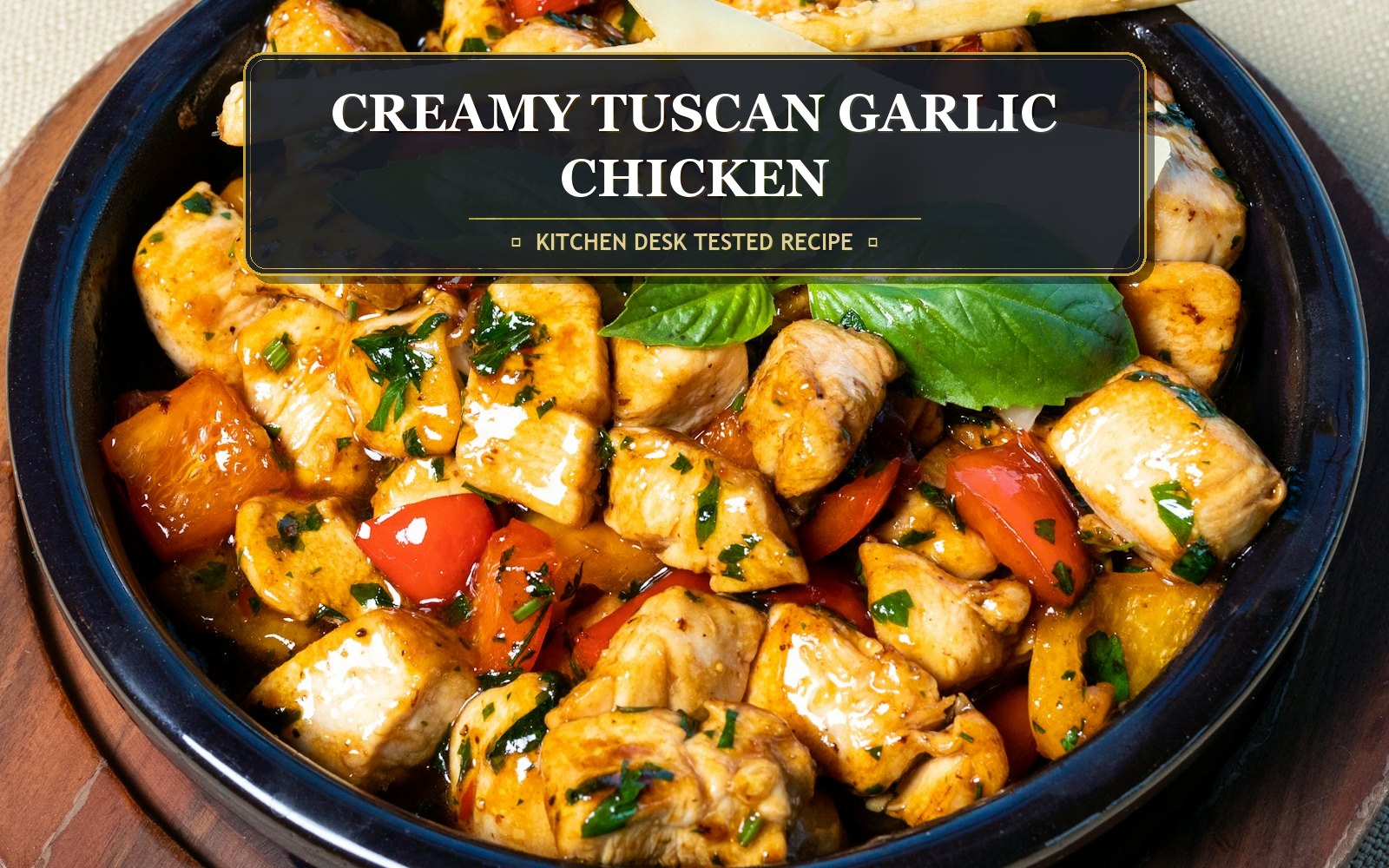
Checklist- 2 Large Chicken Breasts (halved into cutlets)
- 1/4 cup Flour
- 2 tbsp Olive Oil & 1 tbsp Butter
- 4 cloves Garlic (minced)
- 1/2 cup Sun-Dried Tomatoes (sliced)
- 1 cup Heavy Cream
- 1/2 cup Broth
- 1/2 cup Parmesan
- 2 cups Spinach
- 1/2 tsp Italian herbs or dried oregano
- Squeeze of lemon, to finish
Step-by-Step Method
- 1 Prep Cutlets: Slice each breast horizontally into two even cutlets and pat them thoroughly dry. Season both sides with salt and pepper, then dredge in flour and shake off the excess — you want a thin dusting, not a coating.
- 2 Sear: Heat the oil and butter in the skillet over medium-high until the butter foam subsides, then sear the cutlets 4-5 minutes per side until deeply golden and 74°C internally. Do not crowd the pan; work in two batches if needed. Remove to a plate and leave them to rest.
- 3 Aromatics: Turn the heat to medium-low and add the garlic and sun-dried tomatoes to the skillet for about 1 minute, stirring constantly. The pan will still be hot enough to burn garlic in seconds, so keep it moving.
- 4 Deglaze & Sauce: Pour in the broth and scrape the base hard with a wooden spoon to lift all the browned fond, then add the cream and the dried herbs. Simmer 3-4 minutes until it thickens enough to coat the back of a spoon.
- 5 Cheese: Pull the pan off the heat or drop it to low, then whisk in the freshly grated Parmigiano a handful at a time until smooth. Keeping it below a simmer here is what stops the sauce turning stringy.
- 6 Greens: Fold in the baby spinach and let the residual heat wilt it, about 45 seconds. It should stay bright green.
- 7 Combine & Rest: Return the chicken and any resting juices to the pan, spoon sauce over, and let it sit 2 minutes off the heat. Finish with a squeeze of lemon and taste for salt before serving.
The Skillet and the Rest of It
Flavour Balancing: What Each Component Is Doing
| Component | Ingredient | Taste Impact |
|---|---|---|
| Richness | Heavy Cream & Butter | Creamy mouthfeel, coats pasta |
| Umami & Salt | Parmigiano-Reggiano | Deep savory finish |
| Acidity & Sweetness | Sun-Dried Tomatoes | Cuts through rich dairy fat |
| Freshness | Baby Spinach & Garlic | Aromatic herbal balance |
| Body & Gloss | Flour Dredge & Pan Fond | Natural roux that thickens without lumps |
| Brightness | Squeeze of Lemon at the End | Lifts the whole sauce off the palate |
Test Kitchen Notes
Greens, Proteins and Lighter Versions
Swap the chicken for four skin-on salmon fillets, seared skin-side down for four minutes and flipped for two. Skip the flour dredge — salmon does not need it — and thicken the sauce with an extra two minutes of reduction instead. The richness of the fish against the acidic tomatoes is arguably better than the original.
Add a tablespoon of tomato paste with the garlic and a pinch of red chilli flakes, then finish with torn fresh basil. The paste deepens the colour and adds glutamates, giving a sauce with more body and a faintly spicy edge. Cook it uncovered in the oven at 190°C for fifteen minutes for a deeper roasted flavour.
Slice the rested cutlets and toss them through 300g of cooked penne or rigatoni along with the sauce and a ladle of pasta water. The starchy water loosens the sauce to exactly the right coating consistency, and this turns a dinner for four into a dinner for six.
Replace the heavy cream with a 340g can of evaporated milk plus a teaspoon of cornstarch slurried into the broth. Evaporated milk is heat-stable because its proteins have already been denatured during processing, so it resists curdling in a way ordinary milk cannot. You lose some richness but drop roughly 150 calories a serving.
What to Serve With Tuscan Chicken
This is a sauce-forward dish, so what you serve alongside it should exist mainly to carry that sauce. Buttered pappardelle or fettuccine is the obvious answer and the best one — wide flat noodles hold a cream sauce well, and there will be more sauce than the chicken needs. Creamy polenta, mashed potatoes and plain white rice all work on the same logic. If you want something lighter, roasted asparagus, green beans almondine, or a simple rocket salad dressed with lemon and olive oil give the acidity and bitterness a rich cream sauce needs beside it. Crusty bread is close to mandatory; nobody leaves this sauce in the pan. Warm the plates before serving, since a cream sauce tightens fast and looks dull on cold china, and slice the cutlets on a slight bias before plating so the sauce pools in the cuts. Spoon the sauce over rather than under the chicken so the crust stays visible. Finish each plate with a little more grated Parmigiano, cracked black pepper and torn basil. For wine, an unoaked Chardonnay, a Vermentino or a Pinot Grigio all have the acidity to cut through the cream; avoid heavy reds, which fight with the dairy.
Reheating a Cream Sauce Without Splitting It
Cream sauces are the least forgiving category of leftovers, so it is worth knowing what to expect. Refrigerate the chicken and sauce together in an airtight container for up to three days. The sauce will set firm and look separated when cold, which is normal — the fat solidifies and the starch retrogrades. Reheat gently in a covered skillet over low heat with a splash of broth, milk or cream to loosen it, stirring until it comes back together; expect two to three minutes and do not let it boil, or the emulsion will break and the chicken will toughen. The microwave is workable at half power in short bursts, stirring between each, but it heats unevenly and tends to overcook the chicken edges. Freezing is not recommended: heavy cream survives freezing better than milk, but the sauce still separates noticeably on thawing and the spinach turns limp and grey. If you want to freeze part of the dish, freeze the seared cutlets alone for up to two months and make fresh sauce when you reheat them — the sauce takes eight minutes, so there is little to gain from freezing it. For meal prep, the cutlets can be dredged and refrigerated a few hours ahead, and the tomatoes and garlic prepped the night before.