The Four Pillars of Pad Thai Sauce
| Flavor Pillar | Authentic Ingredient | Americanized Shortcut (To Avoid) |
|---|---|---|
| Sour / Tart | Tamarind Paste Concentrate | Vinegar or Ketchup |
| Sweet | Crushed Palm Sugar | Refined White Sugar or Corn Syrup |
| Salty / Umami | Fermented Fish Sauce | Soy Sauce alone |
| Texture & Heat | Crushed Roasted Peanuts & Dried Chili | Processed Peanut Butter |
| Freshness | Lime Wedge Squeezed at the Table | Lime juice cooked into the sauce |
| Crunch | Raw Bean Sprouts folded in for 30 seconds | Sprouts stir-fried until limp |
The Wok, and What to Do Without One
Wok Hei, Tamarind and Why the Sauce Order Matters
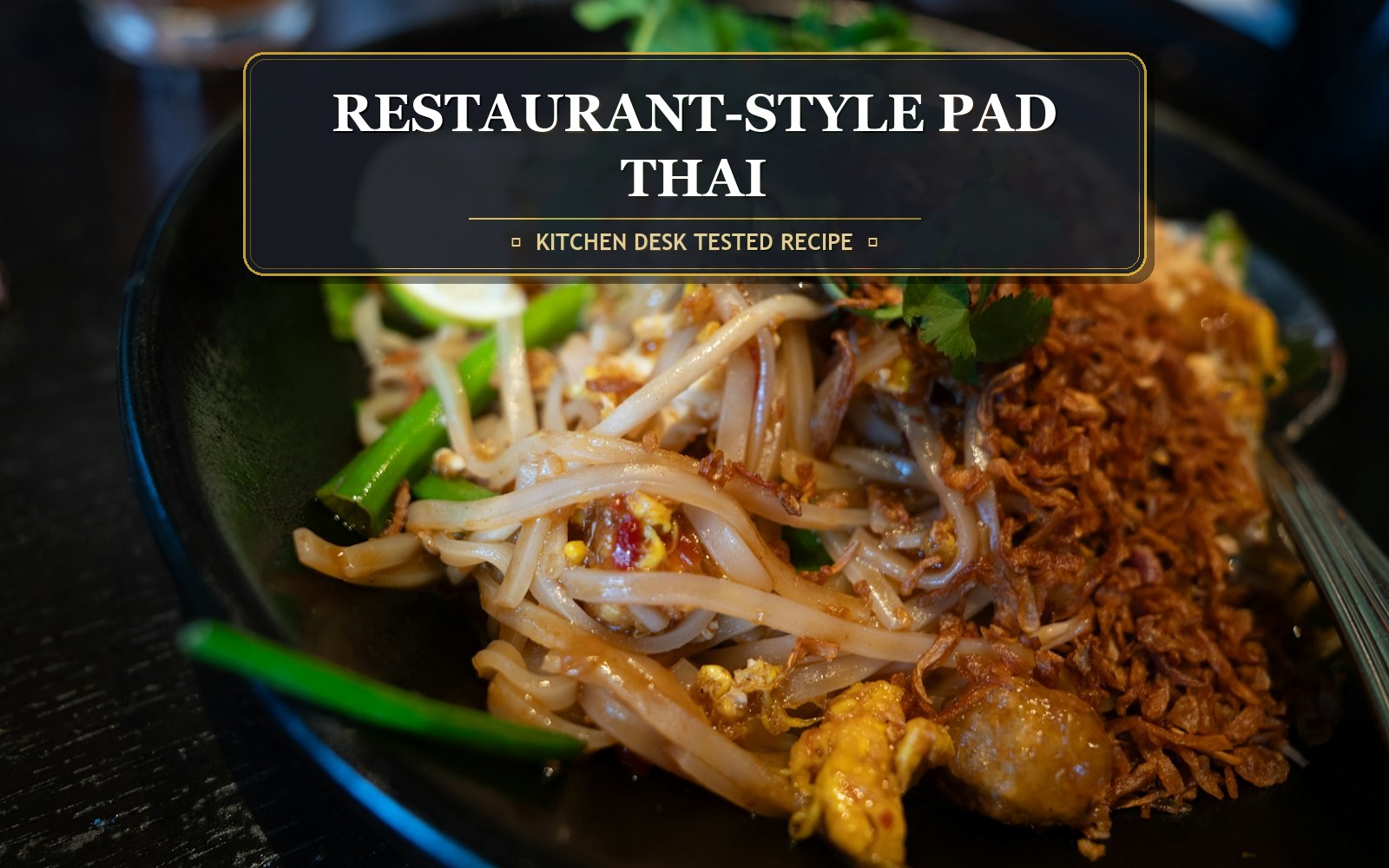
Authentic Pad Thai balances four flavor pillars: sweet (palm sugar), sour (tamarind), salty/umami (fish sauce), and bitter/fresh (chives, bean sprouts, lime). Soaking the rice noodles in warm water instead of boiling them ensures they absorb the savory sauce in the blistering wok without turning to mush.
The noodle soak is the technical heart of this dish and the thing that separates a good pad thai from a gluey one. Rice stick noodles are dried extruded rice starch, and starch granules absorb water and swell — gelatinise — over a temperature range starting around 60°C. Boiling water pushes them straight past full gelatinisation into the point where the granules rupture and release free amylose, which is what makes noodles sticky and prone to breaking. Warm water at roughly 50 to 60°C for thirty minutes hydrates them to pliable but deliberately underdone, leaving perhaps a quarter of the gelatinisation still to happen. That remaining capacity is what lets the noodles drink up the sauce in the wok, which is where their flavour actually comes from.
This is why pad thai noodles taste seasoned all the way through while boiled-then-sauced noodles taste of sauce sitting on the outside. A fully cooked noodle has no absorption capacity left; it can only be coated. An underhydrated one still has thirsty starch, so when the tamarind, fish sauce and palm sugar hit the hot wok, the liquid is pulled into the noodle rather than pooling at the bottom of the pan. The two-minute toss over high heat is not really cooking the noodles — it is finishing their hydration in flavoured liquid instead of plain water.
The sauce is a study in balanced opposition, and each component is chemically doing something the others cannot. Tamarind supplies tartaric and citric acid, giving a sourness that is rounder and fruitier than vinegar because it comes packaged with sugars and pectin. Fish sauce is anchovy fermented in salt for a year or more, during which enzymes break the fish protein down into free amino acids — principally glutamate — plus nucleotides that multiply the perceived savouriness several times over. Palm sugar contributes sucrose along with caramel and mineral notes from the unrefined sap. Take out any one and the whole thing reads as unbalanced rather than merely less flavourful.
Palm sugar specifically matters more than it seems. It is boiled-down palm sap, so alongside sucrose it carries invert sugars, minerals and the products of the boiling itself — which means it dissolves at a lower temperature than granulated sugar and brings a butterscotch depth that white sugar cannot. It is also less sweet by weight, so substituting white sugar one for one makes the dish noticeably sweeter and flatter at once. Brown sugar is the better substitute because molasses replaces some of that mineral complexity.
Wok heat is doing real chemistry, not just cooking fast. A properly ripping wok runs at 250°C or above at the base, and at those temperatures three things happen simultaneously: Maillard browning on the protein and the noodles, caramelisation of the palm sugar in the sauce, and — with enough heat and a little oil vapour — the aromatic compounds Cantonese cooks call wok hei. That last one comes from oil at the edge of its smoke point interacting with the food's own moisture and released compounds, and it is the smoky note that home versions on domestic burners almost never achieve.
Which is why the pan should be crowded as little as possible. Every ingredient you add drops the pan temperature, and if the total mass is too large the wok never recovers above the threshold where browning happens — instead the food releases water, the temperature stalls near 100°C, and you are steaming rather than stir-frying. This is the real reason authentic pad thai is cooked one or two portions at a time, even in restaurants with 20,000 BTU burners, and why doubling this recipe in one pan produces a soggy result. Cook two separate batches.
The eggs are pushed to one side and scrambled separately for the same reason: they need direct contact with hot metal to set into tender curds rather than coating the noodles in a thin film. Egg proteins begin coagulating around 62°C and are fully set by 70°C, so on a 250°C surface they set almost instantly — which is exactly what you want. Fold them through at the end so they stay as distinct pieces.
The final additions are all about contrast and they all go in late deliberately. Bean sprouts are about 90 percent water inside rigid cell walls, and thirty seconds of heat leaves those walls intact so the sprouts stay crunchy; a minute longer and they collapse into limp threads and release water into the sauce. Garlic chives wilt but keep their allium bite. Crushed peanuts add fat and crunch that survives contact with sauce, and the lime squeezed at the table supplies fresh volatile citrus compounds that would have boiled off entirely if added in the wok — which is why the lime wedge on the side is not a garnish but a required ingredient.
Key Advantages & Science
- ✓Authentic Thai street food flavor with zero ketchup or peanut butter hacks
- ✓Fast 10-minute wok cooking
- ✓Balanced protein, carb, and fiber profile
- ✓Sauce can be mixed days ahead and keeps for weeks
- ✓Endlessly adaptable to whatever protein you have
Important Considerations
- !Requires soaking noodles 30 minutes in advance
- !Requires specialty tamarind paste concentrate
- !Must be cooked one or two portions at a time
- !Domestic burners rarely reach true wok temperatures
Ingredients
Checklist- 150g Rice Stick Noodles
- 100g Chicken & 6 Shrimp
- 2 Eggs
- 1 cup Bean Sprouts & Garlic Chives
- 2 tbsp Tamarind Paste
- 2 tbsp Fish Sauce
- 2 tbsp Palm Sugar
- 2 tbsp Crushed Peanuts, Lime
- 3 tbsp Neutral Oil
- 2 tbsp Preserved Radish, chopped (optional)
- 1 tsp Dried Chili Flakes, to serve
Step-by-Step Method
- 1 Soak: Soak the rice noodles in warm — not boiling — water for 30 mins until pliable but still firm and slightly chalky at the centre. They should bend easily around your finger without snapping. Drain well; wet noodles will steam rather than fry.
- 2 Sauce: Whisk the tamarind, fish sauce, palm sugar, and 1 tbsp water until the sugar dissolves. Taste it — it should be aggressively sour, salty and sweet all at once, because the noodles will dilute it considerably. Adjust before it goes near the wok, not after.
- 3 Mise en Place: Have every single ingredient measured and within arm's reach of the stove before you light it. The whole cook takes under four minutes and there is no time to chop anything once it starts.
- 4 Heat the Wok: Get the wok genuinely smoking hot over your highest flame, then add 2 tbsp of oil and swirl it up the sides. It should shimmer and just begin to wisp.
- 5 Stir Fry Protein: Add the chicken and shrimp in a single layer and leave them undisturbed for 30 seconds to take colour, then toss for another minute until just cooked. Push them up the side of the wok.
- 6 Eggs: Add the remaining oil to the cleared centre, crack in the eggs, and let them set for 20 seconds before breaking them into large soft curds.
- 7 Noodles & Sauce: Add the drained noodles and pour the sauce around the edge of the wok rather than into the middle, so it sizzles and caramelises on the way in. Toss constantly over the highest heat for about 2 minutes until the noodles have absorbed the sauce and turned glossy and slightly chewy.
- 8 Greens & Serve: Fold in the bean sprouts and garlic chives for 30 seconds only — they should stay crunchy — then turn out onto plates. Garnish with crushed peanuts, chili flakes, extra raw sprouts and a lime wedge, and serve immediately.
Pad Thai Problems and Their Causes
| Symptom | Underlying Cause | Fix |
|---|---|---|
| Noodles gummy and clumped | Boiled instead of soaked, or over-soaked | Warm water 30 minutes only; still firm when drained |
| Noodles broke into short pieces | Over-hydrated, then tossed hard | Drain while they still have a chalky centre |
| Soggy, steamed instead of fried | Wok overcrowded, temperature collapsed | Cook one or two portions at a time, never four |
| Sauce pooled at the bottom | Noodles fully cooked, no absorption left | Underhydrate the noodles; the wok finishes them |
| Cloyingly sweet | White sugar substituted for palm sugar | Palm or brown sugar; taste the sauce before cooking |
| Flat and one-dimensional | Missing one of the four pillars | Sauce must taste sour, salty and sweet all at once |
| Bean sprouts limp and watery | Cooked more than 30-45 seconds | Fold in at the very end, off heat if needed |
| No smoky depth | Domestic burner cannot reach 250°C | Preheat the wok longer; use a bare carbon steel pan |
Test Kitchen Notes
Proteins, Noodle Widths and Heat Levels
Use twelve large shrimp and no chicken, and if you can get head-on shrimp, sear the heads separately in the oil first and discard them — the fat and roe that render out give the whole dish an intensely shrimp-forward flavour. This is the most common street version in Bangkok and arguably the best.
Replace the chicken and shrimp with 150g of pressed extra-firm tofu, fried in cubes until golden before anything else goes in the wok, and swap the fish sauce for a light soy plus a teaspoon of vegetarian mushroom stir-fry sauce. Leave the eggs out or use a crumbled firm tofu scramble in their place.
Use glass noodles — mung bean vermicelli — instead of rice sticks. They need only a five-minute warm soak and they behave quite differently, staying slippery and translucent rather than chewy. Reduce the sauce by a third, since glass noodles absorb far more aggressively and will drink the lot.
Cook the pad thai and set it aside, then make a thin two-egg omelette in the wok, slide the noodles into the centre, and fold the edges over to make a parcel. Turn it out seam-side down. A restaurant presentation that also has the practical benefit of keeping the noodles hot for longer.
What to Serve With Pad Thai
Pad thai is street food and it is meant to be finished by the person eating it, which is why the garnishes are not optional decoration. Serve each plate with a generous lime wedge, a small mound of raw bean sprouts, extra crushed peanuts, and dried chili flakes on the side so everyone adjusts their own balance — in Thailand the table carries a set of four condiments known as the khruang phrung: fish sauce, sugar, chili flakes and chilies in vinegar, and setting out something similar transforms the meal. Garlic chives cut into batons, banana blossom if you can find it, and a wedge of raw cabbage are traditional accompaniments that add fresh crunch and bitterness against the sweet-sour noodles. Serve it on flat plates rather than in bowls, in a loose pile rather than packed down, and eat it immediately while the noodles still have their chew. It needs almost nothing else to make a meal, but a plate of som tam, a few chicken satay skewers, or a simple clear soup like tom jued all work alongside it. Cold beer with a squeeze of lime is the standard drink, or Thai iced tea if you want something sweet; a dry Riesling or a Gewürztraminer handles the sweet-sour-salty profile better than most wines.
Reheating Noodles Without Turning Them to Paste
Pad thai is best eaten within minutes of cooking, but the components store very differently and that is worth exploiting. The sauce is the standout: mixed tamarind, fish sauce and palm sugar keeps in a sealed jar in the refrigerator for up to a month, and making a triple batch means future pad thai is a fifteen-minute dinner. Soaked and drained noodles can be tossed with a teaspoon of oil and refrigerated for a day, though they firm up slightly and are best brought back to room temperature before frying. Cooked pad thai refrigerates for up to three days in an airtight container. Reheating is where care is needed: a microwave makes the noodles gummy and rubbery, so use a hot skillet with a tablespoon of water and a teaspoon of oil, tossing over high heat for two minutes until it steams back to life. It will never be quite as good as fresh, since the noodles have finished absorbing and can only soften from here. Add fresh sprouts, peanuts and lime after reheating rather than reheating them with the dish; they are what makes the leftovers taste alive. Freezing is not recommended — rice noodles turn mealy and the shrimp go rubbery. Prep-wise, everything can be chopped and measured a day ahead, which is genuinely worthwhile given how fast the actual cook is.